






Memilih alat penyemprot bitumen yang salah adalah kesalahan mahal yang baru Anda sadari setelah inspeksi pertama gagal. Tangki tampak baik-baik saja, pembakar berfungsi, batang penyemprot terlipat — tetapi surveyor mengukur lapisan perekat Anda dan menemukan laju aplikasinya bervariasi dari 0,3 hingga 0,7 L/m² di jalur yang sama. Ketidakkonsistenan itu membuang bahan pengikat, menggagalkan pemeriksaan kualitas, dan memaksa pengerjaan ulang.
Kapasitas truk jarang menjadi faktor yang menggagalkan sebuah proyek. sistem kontrol adalah. Dalam panduan ini, kami menguraikan cara kerja alat penyemprot bitumen (juga disebut distributor aspal或truk distributor bitumen) benar-benar berfungsi, tiga tingkat kontrol penyemprotan, dan lima spesifikasi yang membedakan mesin yang lolos inspeksi jalan raya dari mesin yang menghabiskan biaya Anda setiap kilometernya.
Apa Itu Alat Penyemprot Bitumen (Distributor Aspal)?
Penyemprot bitumen adalah mesin yang dipasang di truk atau trailer yang mengaplikasikan lapisan bitumen panas, aspal emulsi, atau pengikat yang dimodifikasi secara presisi dan seragam ke permukaan jalan. Mesin inilah yang bertanggung jawab untuk lapisan dasar, jaket tack, pelapisan permukaan (penyegelan chip)dan lapisan kedap air / perekat dalam konstruksi dan pemeliharaan jalan.
Terminologi yang digunakan berbeda-beda menurut wilayah, tetapi merujuk pada peralatan yang sama:
- Alat penyemprot bitumen — umum di Asia dan Afrika
- Distributor aspal — umum di Amerika Utara
- Distributor tekanan bitumen — umum di India dan Timur Tengah
Apa pun sebutannya, pekerjaannya identik: menaburkan sejumlah bahan pengikat per meter persegi agar lapisan aspal berikutnya merekat dengan benar. Kata kuncinya di sini adalah... kuantitas terkontrol per meter persegi — dan justru di situlah perbedaan terbesar antar mesin berada.

Masalah Sebenarnya: Mengapa Tingkat Pendaftaran Menentukan Segalanya
Tingkat aplikasi diukur dalam liter per meter persegi (L/m²)Lapisan perekat mungkin hanya membutuhkan 0,3–0,6 L/m² pengikat sisa; lapisan dasar atau pelapis permukaan membutuhkan lebih banyak. Jika salah, Anda akan membayar dua kali lipat:
- Terlalu banyak pengikat: Anda membuang-buang bitumen yang mahal, permukaan tanah mengalami kerusakan, dan kehilangan agregat meningkat.
- Binder terlalu kecil: Lapisan-lapisan tersebut gagal merekat, menyebabkan delaminasi dan kerusakan dini pada perkerasan jalan.
Inilah bagian yang paling sering dilewatkan oleh pembeli: Tingkat aplikasinya bergantung pada kecepatan truk. Jika alat penyemprot Anda memompa bahan pengikat dengan laju aliran tetap, tetapi pengemudi melambat di tikungan atau mempercepat di jalan lurus, laju L/m² akan berubah secara otomatis — meskipun tidak ada yang menyentuh katup. Pada mesin dasar, menjaga laju tetap konstan sepenuhnya merupakan tugas operator. Pada mesin cerdas, komputer melakukannya untuk Anda.
Perbedaan tunggal itulah yang menjadi alasan mengapa dua alat penyemprot dengan ukuran tangki dan pembakar yang sama dapat menghasilkan hasil yang sangat berbeda di lokasi.
Tiga Tingkat Kontrol: Manual vs. Semi-Otomatis vs. Sepenuhnya Cerdas
| Fitur | Manual / Tombak Genggam | Setengah otomatis | PLC (Principal Loop) yang Sepenuhnya Cerdas |
|---|---|---|---|
| Kontrol laju aplikasi | Operator menilai dengan mata telanjang | Operator menjaga kecepatan & tekanan tetap stabil | Komputer menghubungkan sensor kecepatan ke aliran pompa, menyesuaikan secara otomatis L/m². |
| Konsistensi | Rendah — tergantung pada keterampilan | Sedang — kesalahan manusia tetap ada | Tinggi — seragam tanpa memandang kecepatan |
| Penggunaan umum | Penambalan, retakan, pekerjaan kecil | Jalan distrik, proyek menengah | Jalan raya, bandara, pekerjaan yang dikontrol spesifikasinya. |
| Batang semprot | Hanya tombak tangan | Batang lipat tetap/dasar | Batang lipat hidraulik, kontrol nosel individual. |
| Lulus inspeksi ketat | Jarang | Kadang-kadang | Secara konsisten |
| Limbah pengikat | Tinggi | 中等 | 低 |
Alat penyemprot manual (Unit genggam atau unit yang dipasang pada troli kecil) murah dan berguna untuk menambal, menutup retakan, dan area yang tidak dapat dijangkau oleh truk. Alat ini sebaiknya... suplemen, bukan alat pengaspalan utama Anda.
Distributor semi-otomatis Pasanglah alat penyemprot sungguhan pada sasis truk dengan pembakar dan pompa. Ini merupakan peningkatan yang signifikan, tetapi keseragaman semprotan masih bergantung pada pengemudi yang mempertahankan kecepatan konstan — yang sulit dilakukan di medan sebenarnya.
Distributor yang sepenuhnya cerdas menggunakan sistem kontrol PLC (Seri LS Feiteng menggunakan Siemens PLC) yang membaca kecepatan truk di darat dan secara otomatis mengatur keluaran pompa dan pengaturan waktu nosel untuk menjaga target L/m² tetap stabil. Inilah yang semakin dipersyaratkan oleh spesifikasi jalan raya dan bandara, dan konfigurasi inilah yang melindungi margin keuntungan Anda pada pekerjaan dengan tonase besar.
5 Spesifikasi yang Benar-Benar Penting Saat Anda Membeli
Abaikan foto brosur yang mengkilap. Saat membandingkan penawaran harga, periksa lima hal ini secara berurutan:
1. Sistem kontrol. PLC manual, semi-otomatis, atau cerdas? Ini adalah keputusan terpenting dan harus didasarkan pada jenis proyek Anda, bukan hanya anggaran Anda. Pekerjaan jalan raya dan bandara yang dikontrol spesifikasinya membutuhkan kontrol cerdas.
2. Desain batang semprot dan nosel. Carilah batang semprot lipat hidrolik tiga bagian yang bergerak naik/turun dan kiri/kanan untuk menyesuaikan lebar dan menghindari rintangan. Hitung jumlah nozel (Seri LS menggunakan 32 nosel pintar) dan pastikan masing-masing dapat diaktifkan secara individual sehingga Anda dapat menyesuaikan lebar jalan dengan tepat. Yang terpenting, tanyakan tentang sistem pembersihan — Nozel yang tersumbat adalah penyebab utama waktu henti (downtime). Nozel lepas cepat (Feiteng: penggantian dalam waktu kurang dari 5 menit) dan siklus pembersihan otomatis menghemat waktu berjam-jam di lokasi.
3. Pemanasan dan isolasi. Pengikat harus tetap berada dalam rentang viskositasnya (biasanya 160–200°C untuk bitumen panas). Periksa pembakar (Seri LS menggunakan Kompor Italy Riello 200.000 kcal/jam dengan kumparan minyak termal, pemanasan pada 10–15°C/jam) dan isolasi (tangki dalam baja karbon 6mm + epoksi anti-korosi + wol batu 50mm, kehilangan panas statis ≤12°C selama 8 jam). Isolasi yang buruk berarti pengikat dingin, pipa tersumbat, dan proses start-up pagi yang lambat setiap hari.
4. Pompa bitumen. A pompa perpindahan positif, viskositas tinggi Pompa harus mampu menangani pengisian tangki self-priming dan penyemprotan, serta sirkulasi dan back-siphon untuk penghentian yang bersih. Jika Anda berencana menyemprot bitumen yang dimodifikasi polimer, pastikan pompa dan pipa tersebut memiliki rating untuk pengikat viskositas tinggi.
5. Kapasitas tangki dan sasis. Kapasitas biasanya berkisar antara 4 m³ hingga 10 m³+; sesuaikan dengan hasil produksi harian dan jarak angkut Anda. Kemudian pilih yang sesuai. casis — dan di sinilah pembeli internasional harus memperhatikan (lihat di bawah).
Dua Konfigurasi Feiteng: Seri LS (Body Atas) vs. Truk Lengkap (Kemudi Kanan)
Feiteng menawarkan alat penyemprot dalam dua bentuk sehingga Anda dapat menyesuaikannya dengan situasi impor dan registrasi Anda:
Alat Penyemprot Bitumen Otomatis Seri LS (6000L) — Unit bodi atas/seluncur cerdas. Tangki berinsulasi 6000L, pembakar Riello Italia, PLC Siemens, 32 nozel cerdas, batang semprot lipat hidraulik, mode kontrol ganda, dan sistem nozel pembersih otomatis. Dapat dipasang pada sasis FAW, Shacman, atau Mercedes-Benz dan merupakan pilihan yang baik jika Anda ingin mencari atau sudah memiliki sasis lokal. Tambahan opsional meliputi pompa pemulihan bitumen, tangki pencampur emulsi, dan pelacakan GPS. FOB Qingdao, waktu tunggu 25 hari, bersertifikasi ISO/EAC.
Truk Distributor Bitumen Cerdas RHD 6000L (Dongfeng 4×2) — truk lengkap siap kerja yang dibangun di atas sasis Dongfeng 4×2 di kemudi kanan konfigurasi. Ini adalah solusi impor langsung untuk pasar mengemudi di sisi kiri — termasuk sebagian besar Afrika Timur dan Selatan (Kenya, Uganda, Zimbabwe, Tanzania) dan sebagian Asia — di mana kendaraan dengan kemudi kanan diperlukan untuk pendaftaran jalan.
Keduanya mampu menangani aspal panas, aspal emulsi, dan bitumen modifikasi viskositas tinggi, serta cocok untuk lapisan dasar, lapisan perekat, pelapis permukaan, lapisan kedap air, dan lapisan pengikat pada jalan raya, landasan pacu bandara, dan jalan perkotaan.
Kesalahan Umum yang Dilakukan Pembeli Internasional
- Membeli hanya berdasarkan ukuran tangki. Tangki yang lebih besar tidak akan memperbaiki laju aplikasi yang tidak konsisten. Tentukan sistem kontrol terlebih dahulu.
- Mengabaikan LHD vs. RHD. Jika negara Anda menggunakan sistem mengemudi di sisi kiri jalan, truk dengan kemudi kiri mungkin akan gagal dalam proses pendaftaran. Konfirmasikan konfigurasi kemudi sebelum memesan — jauh lebih murah untuk menentukan kemudi kanan sejak awal daripada memperbaikinya di pelabuhan.
- Meremehkan sistem pembersihan. Setiap nosel yang tersumbat berarti kehilangan waktu produksi. Prioritaskan nosel yang mudah dilepas dan siklus pembersihan otomatis.
- Tidak ada pemanasan minyak termal untuk pengikat yang dimodifikasi. Pemanasan dengan api langsung berisiko menghanguskan PMB. Untuk pengikat yang dimodifikasi atau memiliki viskositas tinggi, pastikan menggunakan kumparan minyak termal.
- Memilih sasis tanpa dukungan suku cadang lokal. Pilihlah merek sasis yang dapat diservis oleh dealer lokal Anda, atau Anda akan tertahan menunggu suku cadang.
Daftar Periksa Permintaan Penawaran (RFQ): Apa yang Harus Anda Kirimkan untuk Mendapatkan Penawaran yang Akurat
Untuk mendapatkan penawaran harga yang tepat dalam satu kali pengiriman, bukan lima kali, kirimkan kepada kami:
- Jenis aplikasi — lapisan dasar, lapisan perekat, lapisan penutup permukaan/pelapisan permukaan, atau perawatan
- Jenis pengikat — bitumen panas, emulsi, atau bitumen yang dimodifikasi polimer (PMB)
- Kapasitas tangki yang dibutuhkan — misal, 4.000 / 6.000 / 8.000 L
- Konfigurasi drive — LHD atau RHD — dan merek sasis pilihan
- Kisaran laju aplikasi target (L/m²) dan tipikal lebar jalan
- Sertifikasi / standar diperlukan di negara Anda (ISO, EAC, dll.)
- Pelabuhan tujuan
Dengan tujuh poin ini, kami dapat merekomendasikan konfigurasi yang tepat dan memberikan penawaran harga yang akurat, biasanya dalam waktu 24 jam.
Pertanyaan yang Sering Diajukan (FAQ)
T: Apa perbedaan antara alat penyemprot bitumen, alat penyebar aspal, dan truk penyebar bitumen? A: Itu adalah tiga nama untuk mesin yang sama. "Penyemprot bitumen" umum di Asia dan Afrika, "distributor aspal" di Amerika Utara, dan "distributor tekanan bitumen" di India dan Timur Tengah. Semuanya mengaplikasikan lapisan pengikat yang terkontrol per meter persegi.
T: Bisakah satu mesin menyemprotkan bitumen panas dan emulsi sekaligus? A: Ya. Seri Feiteng LS dan distributor RHD dapat menangani aspal panas, aspal emulsi, dan bitumen modifikasi viskositas tinggi. Pastikan konfigurasi pompa dan pemanas sesuai dengan bahan pengikat utama Anda saat memesan.
T: Apakah Anda menawarkan truk dengan kemudi kanan (RHD) untuk negara-negara yang menggunakan sistem kemudi kiri? A: Ya. Truk Distributor RHD 6000L dibuat dengan konfigurasi kemudi kanan untuk pasar seperti Kenya, Uganda, Zimbabwe, dan Tanzania. Sebutkan LHD atau RHD dalam pertanyaan Anda.
T: Berapa dosis aplikasi yang harus saya gunakan untuk lapisan perekat? A: Lapisan perekat umumnya membutuhkan sekitar 0,3–0,6 L/m² pengikat sisa, tetapi angka pastinya bergantung pada spesifikasi proyek dan kondisi permukaan Anda. Distributor yang cerdas menjaga laju tersebut tetap stabil bahkan ketika kecepatan truk berubah.
T: Berapa lama waktu tunggu dan jangka waktu pengirimannya? A: Seri LS dikirim FOB Qingdao dengan waktu tunggu tipikal 25 hari dan sertifikasi ISO/EAC. Konfirmasikan waktu tunggu saat ini dengan tim kami ketika Anda meminta penawaran.
Kesimpulan
Kualitas alat penyemprot bitumen tidak dinilai dari seberapa besar tangkinya — tetapi dinilai dari seberapa konsisten alat tersebut menyemprotkan bahan pengikat ke jalan. Sistem kontrol menentukan apakah Anda lolos inspeksi dan melindungi anggaran bahan pengikat Anda; batang penyemprot, pemanas, pompa, dan sasis menentukan seberapa andal Anda melakukannya hari demi hari. Tentukan tingkat kontrol Anda terlebih dahulu, sesuaikan konfigurasi penggerak dengan pasar Anda, dan konfirmasikan sistem pembersihan dan pemanasan sebelum Anda membandingkan harga.
Feiteng memproduksi baik bodi atas Seri LS yang cerdas maupun truk distributor RHD siap pakai, dan kami membantu kontraktor internasional menentukan truk yang tepat untuk jalan dan peraturan registrasi mereka. Hubungi Tim Teknik Feiteng dengan tujuh poin RFQ di atas untuk penawaran harga yang disesuaikan dalam waktu 24 jam.
-
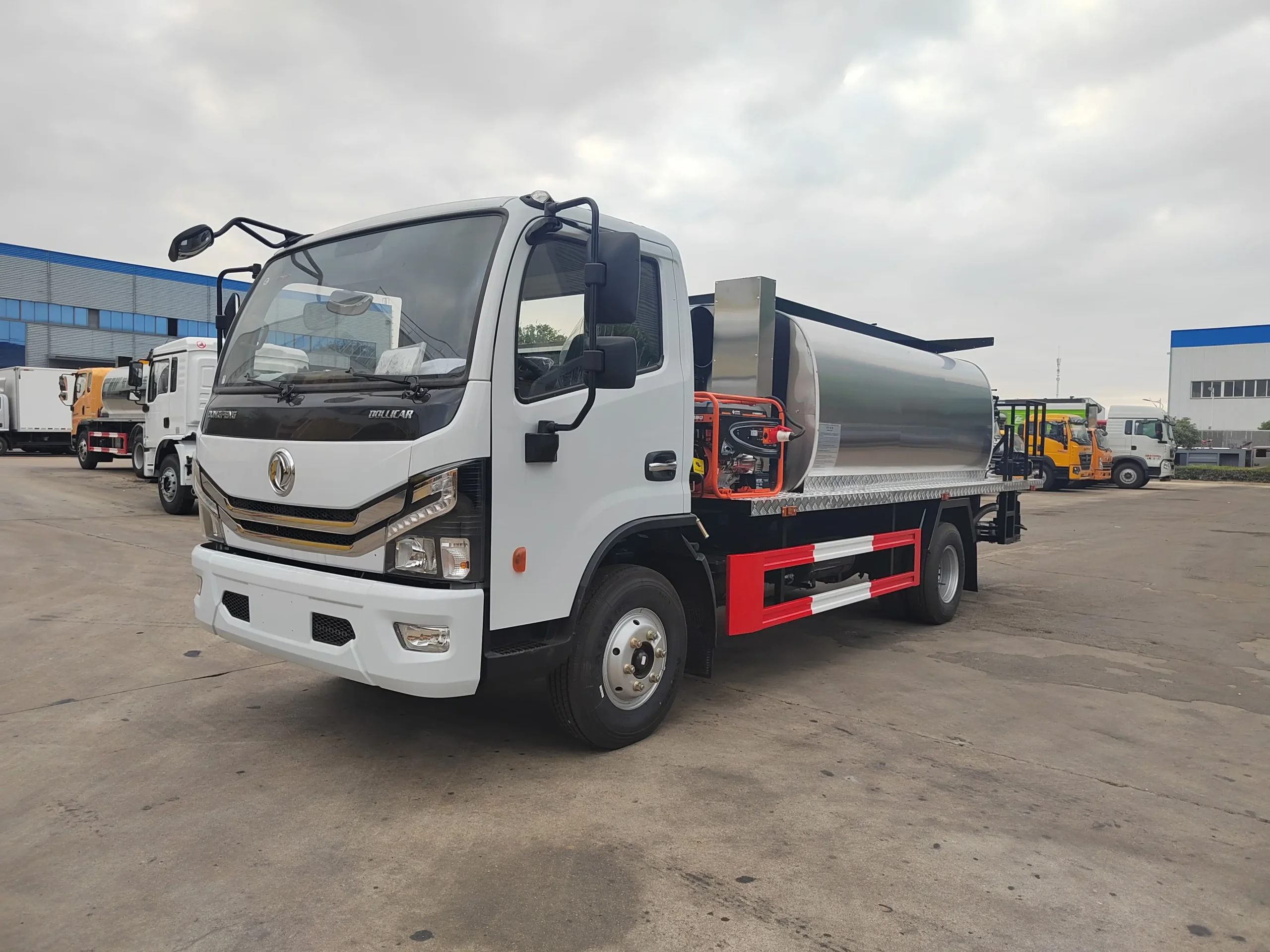
Truk Distributor Bitumen Cerdas Feiteng RHD 6000L | Penyemprot Aspal Dongfeng 4x2 dengan Kontrol Presisi
 Bahasa Indonesia
  English
  Deutsch
  Español
  Tiếng Việt
  العربية
  Français
  Português
  Русский
  हिन्दी
  বাংলা
বাংলা  Українська
  اردو
اردو