
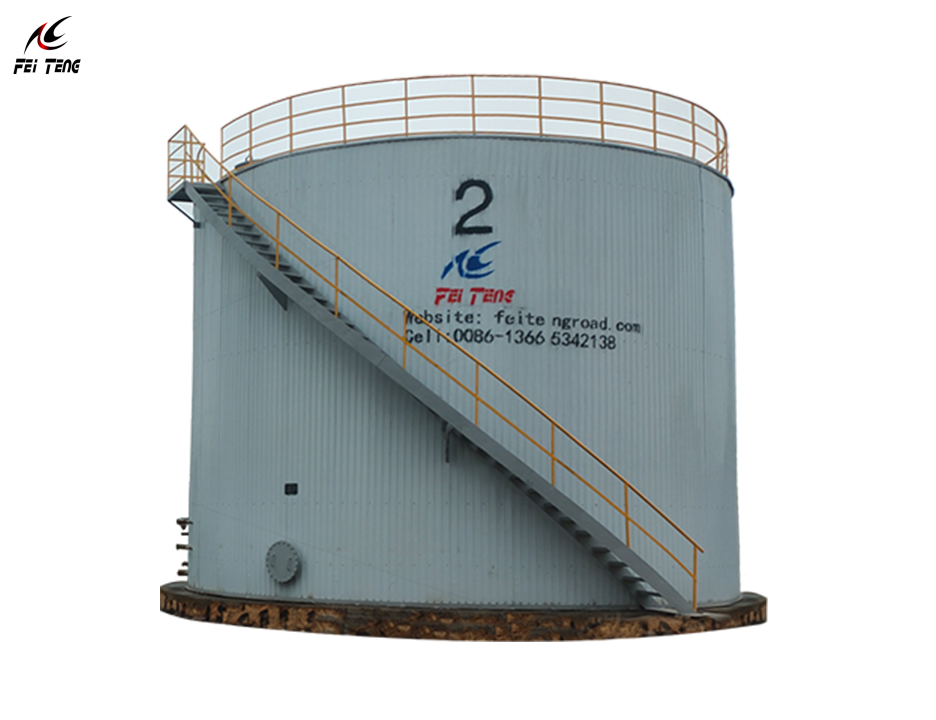


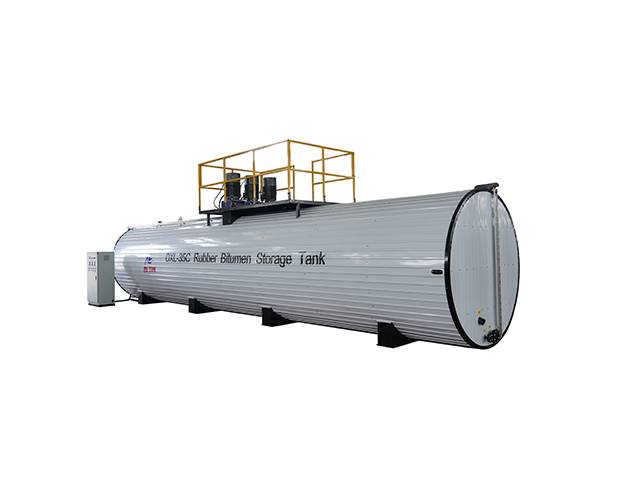



In the asphalt production ecosystem, the bitumen storage tank is often dismissed as a passive vessel—a mere “steel bucket” for hot liquid. This is a fatal engineering misconception. A bitumen tank is, in fact, an active thermodynamic system that must continuously fight two relentless enemies: Thermal Inertia (the energy cost of heating) and Oxidative Aging (the degradation of binder quality).
For plant managers and civil engineers, the difference between a generic tank and an engineered storage solution appears directly in the Profit & Loss (P&L) statement—through fuel consumption, maintenance downtime, and the consistency of the asphalt mix.
Drawing from the engineering specifications of the YDL, DZL, and DXL series, this article deconstructs best practices in modern industrial bitumen storage.
I. Thermodynamic Architecture: Solving the “Heat Transfer vs. Coking” Paradox
The primary challenge in bitumen storage is maintaining workable viscosity without degrading the material. Direct heating delivers speed but risks coking (carbonization of bitumen on heater surfaces). Indirect heating preserves binder quality but suffers from thermal lag.
Feiteng’s engineering approach resolves this conflict through three distinct thermal architectures, each matched to a specific operational tempo.
1. The “Dual-Heating” Hybrid Protocol (YDL / YZSL Series)
For sites without an external thermal oil station, the YDL Series introduces a true “2-in-1” architecture, transforming the storage tank into its own boiler system.
The Physics:
Instead of a simple fire tube, the tank integrates a combustion chamber wrapped in a thermal oil jacket. A diesel or gas burner fires into the chamber, heating the jacketed thermal oil.
The Application Logic:
- High-temperature circulation pumps drive thermal oil through internal radiator coils for indirect heating
- Simultaneously, high-temperature flue gas passes through multi-row smoke tubes, adding radiant heat
Commercial Impact:
- Overall thermal efficiency of 70–85%
- Eliminates the CapEx of a standalone thermal oil boiler
- Exports hot thermal oil to trace-heat pipelines and bitumen pumps, removing the need for electric heating tapes
2. Zonal Electric Heating Strategy (DZL Series)
In intermittent operations—or regions with low electricity costs—heating 45 tons of bitumen just to use 5 tons is a massive waste of operational expenditure.
The Design:
The DZL-35L / DZL-45 adopts a Partitioned (Zonal) Heating structure. A compact high-temperature chamber (~6m³) is nested within the main tank.
Operational Advantage:
- Startup heating focuses only on the small high-temperature zone
- As hot bitumen is discharged, negative pressure draws preheated bitumen from the low-temperature zone
ROI Logic:
This approach prevents repetitive full-tank reheating, which accelerates oxidation. It enables rapid startup (temperature rise of 3–5°C/hour in the active zone) while keeping the bulk volume in an energy-saving dormant state.

II. Rheological Management: The Science of Agitation
When storing Polymer Modified Bitumen (PMB) or Crumb Rubber Modified Bitumen (CRMB), sedimentation becomes the dominant risk. Polymers float, rubber crumbs sink—without aggressive mixing, binder homogeneity collapses.
1. Horizontal vs. Vertical Agitation Dynamics
Conventional vertical stirrers create surface vortices but fail to mobilize bottom sediments. The DXL and YDXL series (Rubber Bitumen Equipment) use a fundamentally different kinematic approach.
Mechanical Configuration:
- Three sets of high-power, frequency-controlled agitators (5.5kW–7.5kW each)
Flow Topology:
- Agitator shafts are horizontal
- Drive motors are top-mounted (vertical)
- Eliminates chronic side-seal leakage seen in traditional horizontal mixers
Best Practice:
Blade geometry is designed to sweep the entire lower hemisphere of the tank, forcing sediment upward and maintaining uniform SBS or rubber powder dispersion.
2. Eliminating “Dead Zones”
Even with mixing, residual material can accumulate and degrade.
Design Feature:
The RLC Series (Emulsion Tanks) and DXL Series incorporate ultra-low-position extraction outlets.
Why It Matters:
In PMB storage, residual aged material can contaminate fresh batches. Full evacuation capability is essential for quality control in high-spec highway projects.
III. System Integration & Safety Logic
A bitumen tank is only as safe as its control logic. Feiteng’s designs implement strict interlock protocols, particularly between burners, pumps, and heaters.
1. Pump–Burner Interlock Protection
In ZYDST and YDL self-heating systems, the burner is hard-wired to the thermal oil circulation pump.
- The burner cannot ignite unless oil flow is confirmed
- Prevents stagnant oil overheating, cracking, or explosive failure
2. Viscosity-Dependent Auxiliary Heating
Electric thermal oil heaters (used for pipeline tracing) follow a strict operational rule.
- Activated only when viscosity blocks pump startup
- Not designed for continuous operation
Overuse wastes energy and increases coking risk in small-diameter pipelines.
IV. Structural & Thermal Insulation Standards
Even the best heating system fails if the tank shell leaks energy.
- Insulation Thickness: Минеральная вата высокой плотности 100 мм
- Density: ≥ 112 kg/m³
Thermal Performance Metric:
A properly insulated industrial tank should exhibit:
- < 1°C temperature drop per hour (static)
- Or < 10% temperature differential loss over 24 hours
Structural Engineering:
Large vertical tanks (e.g., 1250-ton / 1320m³ units) require tapered shell thickness:
- Base: 9.75mm (hydrostatic load zone)
- Top: 4.75mm (low-pressure zone)
This approach optimizes steel usage without compromising safety.
Заключение
Selecting a bitumen storage tank is not a capacity decision—it is a strategic engineering choice between:
- Direct Fire: fast, low upfront cost, high degradation risk
- Thermal Oil: stable and scalable, but infrastructure-heavy
- Electric: clean and precise, but OpEx-sensitive
For modern asphalt plants, the Integrated Dual-Heating Model (YDL / YZSL) represents the current industry gold standard—combining burner independence with the material protection of thermal oil heating.
The result is simple: bitumen enters the mixer in the same chemical state it left the refinery.
 Русский
  English
  Deutsch
  Español
  Tiếng Việt
  العربية
  Français
  Português
  हिन्दी
  বাংলা
বাংলা  Українська
  Bahasa Indonesia
  اردو
اردو