







Wie berechnet man die Wärmeträgeröl-Heizleistung für Bitumenlagertanks?
For asphalt plants, road construction projects, bitumen terminals, and modified bitumen production systems, the heating system behind a bitumen storage tank is just as important as the tank itself.
Many buyers only ask one simple question: “How many tons can this tank store?” But for real project operation, another question is often more important:
What thermal oil heater capacity is required to keep the bitumen hot, pumpable, and ready for production?
If the thermal oil heater is too small, the bitumen may heat too slowly, asphalt production may be delayed, and pipelines or pumps may become difficult to operate. If the heater is oversized, the project may pay for unnecessary equipment cost, fuel consumption, and installation complexity.
This guide explains how to estimate thermal oil heater capacity for bitumen storage tanks and what factors contractors should consider before selecting a heating system.
Why Thermal Oil Heating Is Used for Bitumen Tanks
Bitumen must be stored at a suitable working temperature before it can be pumped, mixed, sprayed, emulsified, or modified. In many asphalt and road construction systems, thermal oil heating is used because it provides stable indirect heating.
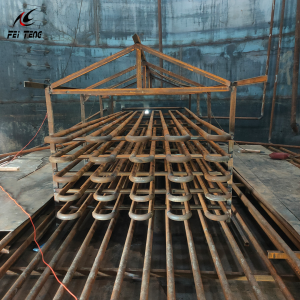
Instead of applying flame directly to the bitumen, a thermal oil boiler or thermal oil heater heats the heat transfer oil. The hot oil then circulates through coils, jackets, or heat exchange pipes inside the bitumen tank.
This method helps provide more uniform heating, reduce the risk of local overheating, keep bitumen pumpable, support continuous asphalt plant operation, protect pumps and pipelines from blockage, and improve temperature control compared with direct flame heating.
For large storage tanks, multiple tanks, modified bitumen systems, or continuous asphalt production, thermal oil heating is often a practical and reliable solution. You can also view Feiteng’s thermal oil boiler for asphalt plants for related heating equipment.
What Determines Thermal Oil Heater Capacity?
There is no single fixed answer for all bitumen storage tanks. The required heater capacity depends on several project-specific factors.
- Bitumen tank capacity
- Initial bitumen temperature
- Target working temperature
- Required heating time
- Tank insulation quality
- Ambient temperature
- Number of tanks heated by one boiler
- Pipeline and pump heating demand
- Continuous heat loss during operation
- Whether the system is used for storage only or production support
A 30m³ tank used for temporary storage does not require the same heating system as a 500m³ vertical storage tank at a large asphalt plant. A tank in a cold region also needs more heating support than a tank operating in a tropical climate.
For buyers comparing different tank structures, Feiteng’s Bitumen-Lagertank category provides several heating and storage options for different project requirements.
Basic Heating Capacity Calculation
A simplified heating calculation can be made using this logic:
Required heat = bitumen mass × specific heat × temperature rise
In practical terms, the heater must provide enough energy to raise the bitumen from its starting temperature to the required operating temperature within the planned heating time.
A simplified formula is:
Heating capacity = Bitumen mass × Specific heat × Temperature rise ÷ Heating timeWhere:
- Bitumen mass depends on tank volume and bitumen density
- Specific heat depends on bitumen grade and temperature range
- Temperature rise is the difference between initial temperature and target temperature
- Heating time is how quickly the project needs the bitumen ready for use
This gives only the theoretical heating demand. In real equipment selection, additional capacity must be considered for heat loss, boiler efficiency, thermal oil circulation, pipeline heating, tank insulation, and safety margin.
Example: Estimating Heater Demand for a Bitumen Tank
Suppose a contractor needs to heat bitumen stored in a tank from 80°C to 150°C.
The temperature rise is:
150°C - 80°C = 70°CIf the tank capacity is large and the project requires heating within a short time, the thermal oil heater must provide a higher heat output. If the project allows longer heating time, a smaller heater may be sufficient.
For example:
- Faster heating time requires larger heater capacity
- Better insulation helps reduce heat loss
- Lower ambient temperature increases heating demand
- Multiple tanks heated together require a larger boiler system
- Long pipelines and pump jackets add extra heat load
This is why heater selection should not be based only on tank volume. It should be based on the full heating system.
Heating Time: A Key Procurement Question
Many buyers ask for a large tank but do not define the required heating time. This often leads to incorrect equipment selection.
For bitumen storage tanks, heating time depends on the project schedule. A road contractor may need the tank ready before daily asphalt production starts. A bitumen terminal may need stable long-term storage rather than fast heating. A modified bitumen plant may need more precise temperature control for production quality.
Before selecting a thermal oil heater, buyers should answer these questions:
- How many hours are available for heating?
- Does the tank need to heat cold bitumen from low temperature?
- Is the tank mainly for temperature maintenance?
- Will the system supply bitumen continuously to an asphalt plant?
- How many tanks will be heated at the same time?
- Are pipelines, valves, and pumps also heated by thermal oil?
If the heater is selected only by tank size, the system may fail to meet real operating requirements.
Tank Insulation and Heat Loss
Insulation has a direct impact on thermal oil heater capacity.
A well-insulated bitumen storage tank loses less heat during operation. This means the heater can focus more on raising and maintaining bitumen temperature instead of continuously compensating for heat loss.
Important insulation factors include:
- Insulation thickness
- Insulation material
- Outer cladding protection
- Tank surface area
- Wind exposure
- Rain and humidity
- Ambient temperature
- Tank installation environment
For outdoor asphalt plants or cold-region projects, insulation quality is especially important. Poor insulation increases fuel consumption and may require a larger heating system.
For large vertical bitumen storage tanks, insulation design becomes even more important because the tank surface area is large and heat loss can be significant during long-term storage. For large storage projects, you may refer to the 500 m³ vertikaler Bitumenlagertank as an example of a large-capacity storage solution.
Storage Heating vs Production Heating
A bitumen storage tank may be used for different purposes. The required heater capacity changes according to the operating mode.
Storage-Only Heating
If the tank only stores bitumen and maintains temperature, the heating demand is mainly related to heat loss compensation. In this case, the heater does not need to raise temperature very quickly, but it must maintain stable heat over long periods.
Fast Heating Before Production
If bitumen must be heated from a lower temperature to working temperature within a limited time, the heater capacity must be higher. This is common for contractors who operate asphalt plants on daily schedules.
Continuous Production Support
If the tank supplies an asphalt mixing plant, bitumen emulsion plant, or modified bitumen plant continuously, the heating system must support both temperature maintenance and material flow. Pumps, pipelines, valves, and process equipment may also require thermal oil heating.
This is why a complete thermal oil system should be designed around the entire bitumen process, not only the storage tank.
One Thermal Oil Boiler for Multiple Bitumen Tanks
In many asphalt plants, one thermal oil boiler heats multiple bitumen tanks. This can reduce equipment duplication and simplify heating management.
However, when one boiler supplies multiple tanks, the total heating demand must include:
- Each tank’s heating requirement
- Pipeline heat loss
- Thermal oil circulation distance
- Pump and valve heating
- Production equipment heating
- Future expansion demand
If all tanks need to heat up at the same time, the boiler must be large enough to support peak demand. If tanks are heated in sequence, a smaller boiler may be possible, but operation scheduling becomes more important.
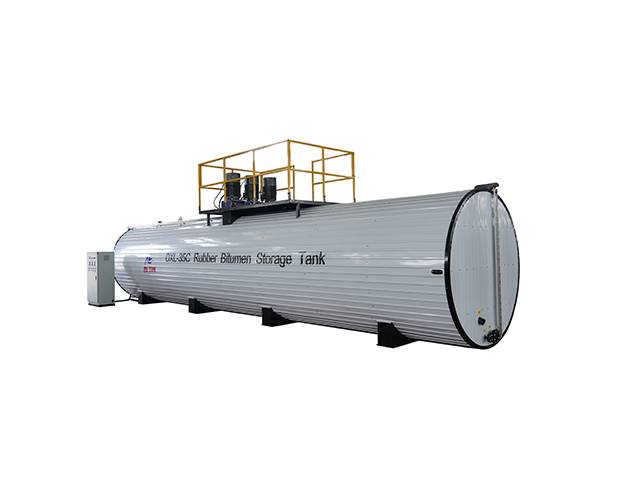
For multiple-tank systems, contractors should discuss the operating logic with the equipment supplier before confirming boiler capacity. Feiteng’s DL Series Thermal Oil Heated Bitumen Tank is suitable for projects that need thermal oil heating and can be considered when planning a tank group system.
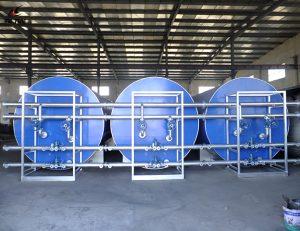
Thermal Oil Flow Rate and Heat Transfer Area
Thermal oil heater capacity is not the only factor. The system also needs proper thermal oil circulation and enough heat exchange area inside the bitumen tank.
Even if the boiler has sufficient heat output, poor circulation or insufficient coil area can limit actual heating performance.
Key design points include:
- Thermal oil pump flow rate
- Coil pipe diameter
- Coil layout inside the tank
- Heat exchange surface area
- Thermal oil inlet and outlet temperature
- Pressure loss in the pipeline
- Valve and pipeline arrangement
- Temperature sensor position
A good thermal oil heated bitumen tank should combine the right boiler capacity with proper coil design and circulation control.
Common Mistakes When Selecting a Thermal Oil Heater
Many problems occur because buyers focus only on the nominal capacity of the tank or boiler.
- Selecting the heater only based on tank volume
- Ignoring required heating time
- Forgetting heat loss from pipelines and valves
- Using poor insulation and expecting low fuel consumption
- Heating multiple tanks with an undersized boiler
- Ignoring local ambient temperature
- Not considering future production expansion
- Overlooking thermal oil pump flow and coil area
- Using storage tank heating logic for production equipment
- Comparing boiler prices without comparing full system design
A low-cost heating system may become expensive if it causes slow heating, high fuel consumption, or asphalt plant downtime.
Information Buyers Should Provide Before Requesting a Quote
To recommend a suitable thermal oil heater or boiler, the supplier needs project information.
Before requesting a quotation, prepare the following:
- Bitumen tank capacity
- Number of tanks
- Initial bitumen temperature
- Target working temperature
- Required heating time
- Local ambient temperature
- Bitumen grade
- Tank insulation requirement
- Asphalt plant capacity
- Whether pipelines and pumps need heating
- Fuel type available on site
- Power supply
- Installation layout
- Whether future expansion is planned
With this information, the supplier can recommend a more accurate thermal oil heater capacity and tank heating configuration.
Feiteng Thermal Oil Heating Solutions for Bitumen Equipment
Feiteng provides thermal oil heating solutions for bitumen storage tanks, bitumen melting machines, asphalt plants, bitumen emulsion equipment, and modified bitumen systems.
Depending on the project requirements, Feiteng can provide:
- Thermal oil heated bitumen storage tanks
- Electric heated bitumen tanks
- Double-heating bitumen tanks
- Large vertical bitumen storage tanks
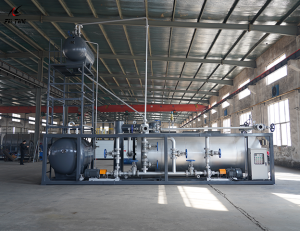
- Thermal oil boilers for asphalt equipment
- Skid-mounted electric thermal oil heaters
- Matching pumps, valves, pipelines, and temperature control systems
For large asphalt plants or multiple-tank systems, a diesel-fired thermal oil boiler may be suitable. For localized heating of pumps, valves, or short pipelines, a compact electric thermal oil heater may be more practical.
The final selection should be based on actual heating demand, tank capacity, heating time, site conditions, and production requirements.
Schlussfolgerung
Calculating thermal oil heater capacity for a bitumen storage tank is not only a matter of tank volume. It requires understanding the full heating demand of the project.
Tank capacity, temperature rise, heating time, insulation, ambient temperature, heat loss, circulation design, and production requirements all affect the final heater selection.
For contractors and asphalt plant operators, the right thermal oil heating system can help maintain stable bitumen temperature, reduce downtime, improve production continuity, and control operating costs.
If you are planning a bitumen storage tank system, asphalt plant heating system, or thermal oil boiler configuration, Feiteng can help evaluate your project conditions and recommend a suitable heating solution.
Contact Feiteng Road Construction Equipment to discuss your tank capacity, required heating time, site temperature, fuel conditions, and matching asphalt equipment.
Request a customized thermal oil heating solution
Häufig gestellte Fragen
How do I calculate thermal oil heater capacity for a bitumen tank?
A basic estimate considers bitumen mass, temperature rise, specific heat, and required heating time. In real projects, heat loss, insulation, boiler efficiency, thermal oil circulation, pipeline heating, and safety margin must also be considered.
Is tank volume enough to select a thermal oil boiler?
No. Tank volume is only one factor. Heating time, initial temperature, target temperature, insulation, ambient temperature, number of tanks, and production demand must also be considered.
Can one thermal oil boiler heat multiple bitumen tanks?
Yes. One thermal oil boiler can heat multiple bitumen tanks if the system is designed with sufficient heat output, pump flow, pipeline layout, and control logic.
Why is insulation important for bitumen tank heating?
Good insulation reduces heat loss and helps maintain stable bitumen temperature. Poor insulation increases fuel consumption and may require a larger heater.
What is the difference between a thermal oil boiler and an electric thermal oil heater?
A thermal oil boiler is usually suitable for larger systems and continuous heating. An electric thermal oil heater is often suitable for localized heating, smaller systems, pump jackets, valves, or auxiliary pipelines.
Can Feiteng help calculate the required heater capacity?
Yes. Feiteng can recommend a suitable thermal oil heater or boiler based on tank capacity, heating time, local temperature, fuel type, site layout, and asphalt production requirements.
-

DL Serie Thermoölbeheizter Bitumentank | 30-50m³ Anpassbares Asphaltlagerungssystem
-
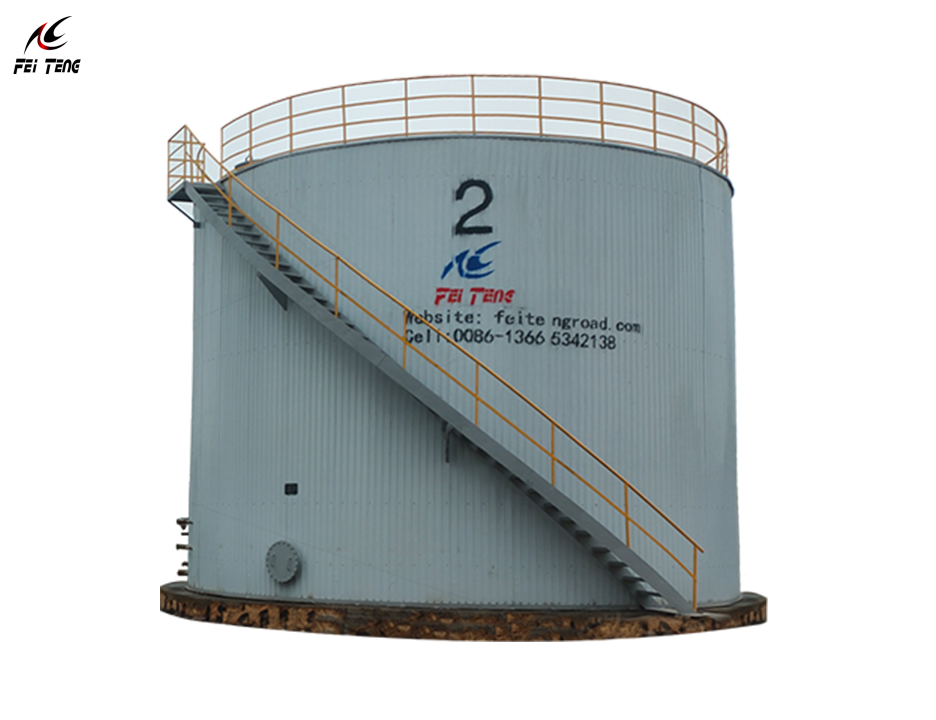
500 m³ vertikaler Bitumenlagertank
-

Automatische elektrische Thermoöl-Heizgeräte (auf einem Rahmen montiert)
 Deutsch
  English
  Español
  Tiếng Việt
  العربية
  Français
  Português
  Русский
  हिन्दी
  বাংলা
বাংলা  Українська
  Bahasa Indonesia
  اردو
اردو