

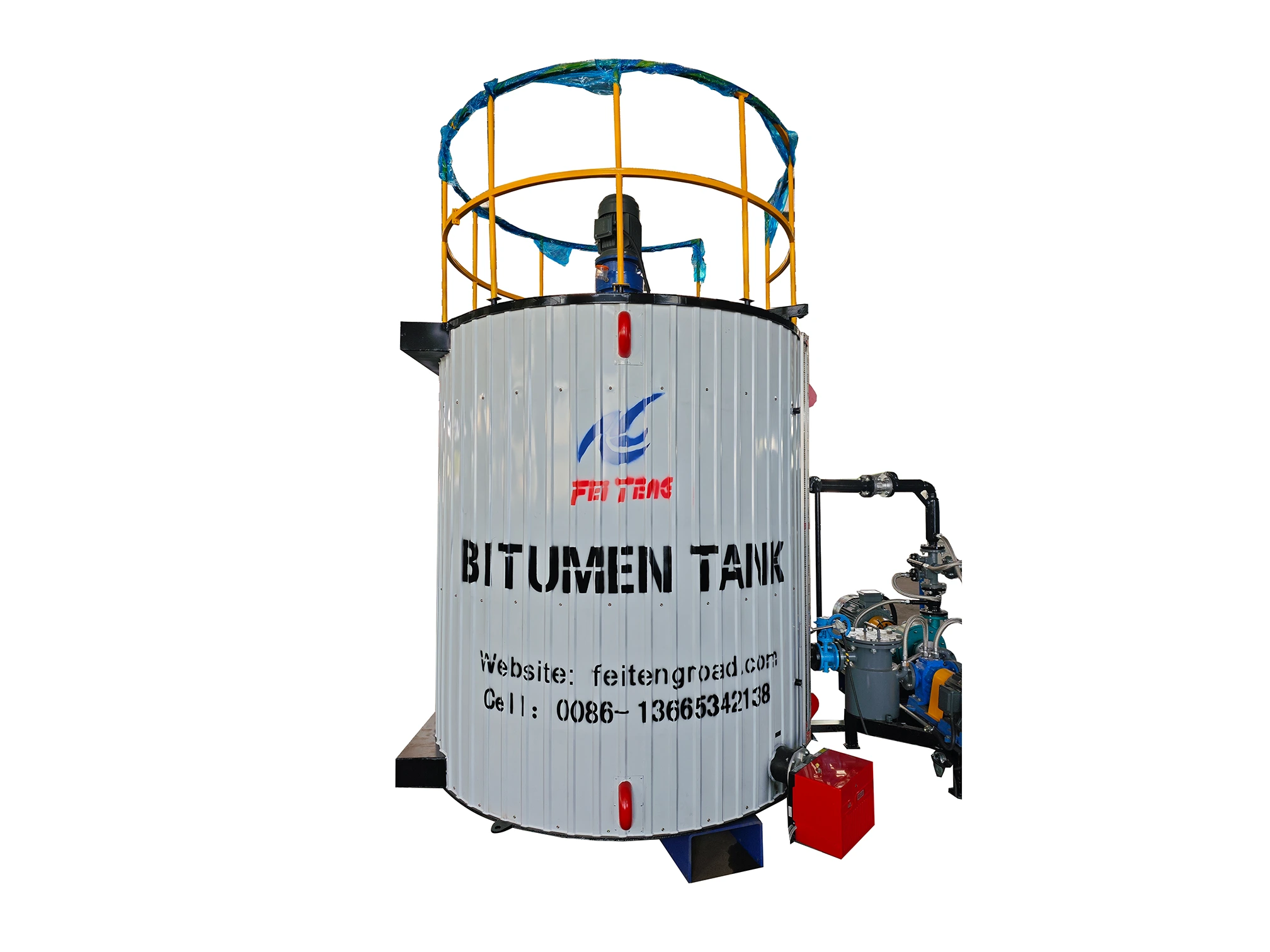
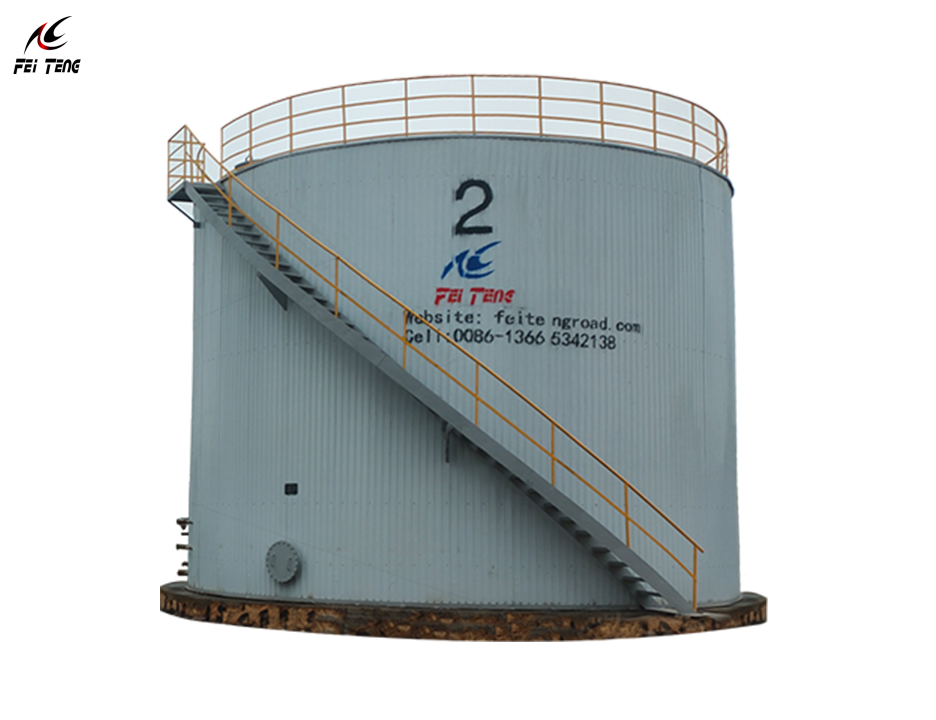


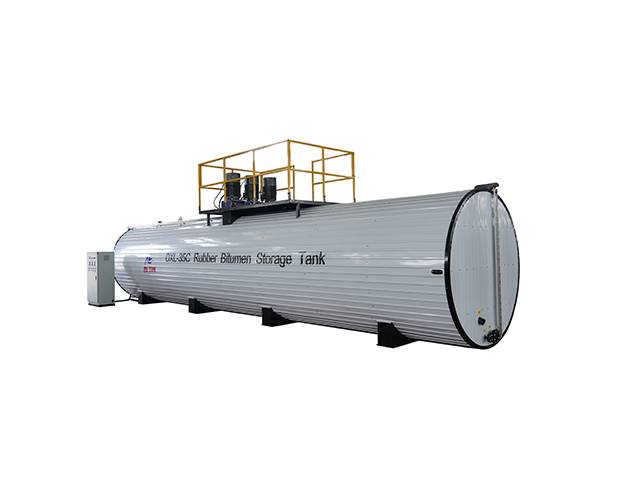



Selecting the correct bitumen storage tank capacity is not simply a matter of choosing the largest tank available. The storage system must match the asphalt mixing plant’s actual production rate, daily bitumen consumption, supply frequency, heating capacity, and operating schedule.
If the tank is too small, the asphalt plant may stop while waiting for new bitumen deliveries or while solid bitumen is still being melted. If the tank is too large, the project may pay more for equipment, insulation, foundations, heating capacity, and long-term temperature maintenance than is necessary.
This guide explains how to calculate bitumen storage tank capacity for an asphalt mixing plant and how to convert the calculation into a practical tank configuration.
Why Bitumen Tank Capacity Must Match Asphalt Plant Production
An asphalt mixing plant consumes bitumen continuously during production. The required storage capacity therefore depends primarily on how many tonnes of asphalt the plant produces and how much bitumen is contained in each tonne of asphalt mixture.
However, plant nameplate capacity alone is not enough. A plant rated at 160 tonnes per hour rarely operates at full output for every scheduled hour. Material feeding, aggregate moisture, mix changes, truck availability, maintenance, and production interruptions all affect the actual operating rate.
A reliable calculation should therefore consider:
- Rated asphalt plant output
- Actual plant utilization rate
- Bitumen content in the asphalt mix
- Daily operating hours
- Required storage days
- Supply and delivery reliability
- Safety reserve
- Maximum usable tank volume
- Number of bitumen grades used
Step 1: Calculate Hourly Bitumen Consumption
The first step is to calculate how much bitumen the asphalt plant consumes during one hour of production.
Formula:
Hourly bitumen consumption = Asphalt plant output × Bitumen content
For example, assume an asphalt plant has a rated output of 160 tonnes per hour and the asphalt mixture contains 5% bitumen.
160 t/h × 5% = 8 tonnes of bitumen per hour
If the plant operates continuously at full capacity, it will consume approximately 8 tonnes of bitumen every hour.
The actual bitumen percentage should always come from the approved asphalt mix design. Different wearing courses, base courses, stone mastic asphalt mixtures, and modified asphalt mixtures may use different binder contents.
Step 2: Adjust for Actual Plant Utilization
Using the rated plant output without adjustment can overestimate daily demand. A utilization factor provides a more realistic estimate of actual production.
Formula:
Actual hourly asphalt output = Rated output × Utilization factor
Suppose the 160 t/h plant operates at an average utilization rate of 80%.
160 t/h × 80% = 128 t/h actual average output
The corresponding average bitumen consumption is:
128 t/h × 5% = 6.4 tonnes of bitumen per hour
For preliminary calculations, contractors may use an estimated utilization factor based on previous projects. For final equipment selection, actual production records or the plant operator’s expected schedule are more reliable.
Step 3: Calculate Daily Bitumen Demand
Daily bitumen consumption depends on the average hourly consumption and the number of productive operating hours.
Formula:
Daily bitumen demand = Rated plant output × Utilization factor × Operating hours × Bitumen content
Using the previous example:
- Asphalt plant output: 160 t/h
- Utilization factor: 80%
- Operating time: 10 hours per day
- Bitumen content: 5%
160 × 0.80 × 10 × 0.05 = 64 tonnes of bitumen per day
The plant should therefore receive, melt, store, and supply approximately 64 tonnes of bitumen for each full production day.
Step 4: Determine the Required Number of Storage Days
The storage period is one of the most important design variables. A project receiving bulk bitumen every day may require less storage than a remote road project supplied by drums or jumbo bags.
Typical questions include:
- How often can bitumen be delivered?
- Is the supplier local or imported?
- Can weather or road conditions delay transportation?
- Is the project operating in a remote area?
- Is bitumen supplied in bulk, drums, or bags?
- How long does the melting process require?
- Would one delayed delivery stop asphalt production?
For a plant with reliable daily bulk deliveries, one to two days of storage may be sufficient. Projects with unstable logistics, imported bitumen, drum supply, or long transportation distances may require several days of stock.
Formula:
Base storage requirement = Daily bitumen demand × Required storage days
For the 160 t/h plant consuming 64 tonnes per day and requiring two days of stock:
64 tonnes/day × 2 days = 128 tonnes
Step 5: Add a Safety Reserve
The calculated consumption should not normally represent the entire available inventory. A reserve helps compensate for delivery delays, production fluctuations, unexpected mix changes, and measurement differences.
Formula:
Required usable storage = Base storage requirement × (1 + Safety reserve)
If a 15% reserve is used:
128 tonnes × 1.15 = 147.2 tonnes of usable storage
The appropriate reserve depends on supply-chain reliability. A project located close to a refinery or terminal may require a smaller reserve than a remote project relying on imported bitumen drums.
Step 6: Convert Bitumen Weight into Tank Volume
Bitumen storage tanks are commonly specified by volume, while project consumption is usually calculated by weight.
Formula:
Required volume = Required bitumen weight ÷ Bitumen density
Bitumen density changes according to grade and temperature. For preliminary sizing, an estimated density can be used, but the final calculation should use the supplier’s actual product data.
Assuming a preliminary density of 0.98 tonnes per cubic metre:
147.2 tonnes ÷ 0.98 t/m³ = approximately 150.2 m³ of usable volume
Step 7: Account for Maximum Filling Level
A storage tank should not be filled to 100% of its nominal volume. Space must remain for thermal expansion, safe operation, level variation, and internal circulation.
Formula:
Nominal tank capacity = Required usable volume ÷ Maximum filling ratio
If the permitted filling ratio is 90%:
150.2 m³ ÷ 0.90 = approximately 166.9 m³
In practical equipment selection, this project might consider a total nominal capacity of approximately 180 to 200 m³, depending on the available standard tank sizes and the required operational reserve.
Complete Bitumen Tank Capacity Formula
The full preliminary calculation can be written as:
Nominal tank volume = Plant output × Utilization factor × Operating hours × Bitumen content × Storage days × Safety factor ÷ Bitumen density ÷ Filling ratio
कहाँ:
- Plant output is measured in tonnes of asphalt per hour
- Utilization factor represents actual average production
- Operating hours are productive hours per day
- Bitumen content is taken from the asphalt mix design
- Storage days represent the required stock period
- Safety factor includes the additional reserve
- Bitumen density converts weight into volume
- Filling ratio accounts for the tank’s usable capacity
Capacity Examples for Different Asphalt Mixing Plants
The following examples use the same preliminary assumptions:
- Utilization factor: 80%
- Operating time: 10 hours per day
- Bitumen content: 5%
- Storage period: 2 days
- Safety reserve: 15%
- Bitumen density: 0.98 t/m³
- Maximum filling ratio: 90%
| Asphalt Plant Output | Daily Bitumen Demand | Calculated Nominal Volume | Indicative Configuration |
|---|---|---|---|
| 80 t/h | 32 tonnes/day | Approx. 83 m³ | 2 × 50 m³ tanks |
| 120 t/h | 48 tonnes/day | Approx. 125 m³ | 2 × 70 m³ or 3 × 50 m³ tanks |
| 160 t/h | 64 tonnes/day | Approx. 167 m³ | 2 × 100 m³ tanks |
| 240 t/h | 96 tonnes/day | Approx. 250 m³ | 3 × 100 m³ tanks |
These configurations are examples rather than fixed recommendations. Actual tank sizing depends on standard tank dimensions, bitumen grades, delivery conditions, heating method, project layout, and required redundancy.
Should You Use One Large Tank or Several Smaller Tanks?
The calculated total capacity can often be divided between several tanks. For many asphalt plants, multiple tanks provide better operating flexibility than one large tank.
Advantages of Multiple Tanks
- Different bitumen grades can be stored separately.
- One tank can supply the plant while another receives or heats new material.
- Maintenance can be completed without shutting down the entire storage system.
- Heating and circulation can be controlled independently.
- The project retains partial storage if one tank is temporarily unavailable.
- Future system expansion may be easier.
When One Large Tank May Be Suitable
- The plant uses only one bitumen grade.
- Bitumen deliveries are stable and frequent.
- Site space is limited.
- The operating process is simple and continuous.
- A separate standby or buffer tank is already available.
For plants using both penetration-grade bitumen and polymer-modified bitumen, separate tanks are normally required because the products must not be mixed.
Tank Capacity Must Match Heating Capacity
A large storage capacity is useful only when the heating system can bring incoming bitumen to the required operating temperature and compensate for heat loss.
The heating system should be selected according to:
- Bitumen delivery temperature
- Required storage temperature
- टैंक की मात्रा
- आवश्यक तापन समय
- परिवेश का तापमान
- Insulation thickness and quality
- तापन विधि
- Pipeline and pump heat loss
A tank designed only to maintain temperature requires less heating power than a tank expected to heat cold or partially solidified bitumen rapidly.
Oversizing storage without increasing heating capacity can create slow startup, uneven temperature distribution, higher fuel consumption, and insufficient bitumen supply during peak asphalt production.
Special Considerations for Drum and Jumbo-Bag Bitumen
When bitumen arrives in drums or one-tonne bags, the melting equipment must also match daily consumption.
For example, if an asphalt plant consumes 64 tonnes of bitumen per day but the melting machine processes only 40 tonnes per day, increasing storage capacity will not solve the supply shortage. The melting system, storage system, pumps, pipelines, and asphalt plant must be sized as one complete process.
The system should be checked for:
- Daily drum or bag melting capacity
- Molten bitumen buffer capacity
- Storage tank heating and circulation
- Bitumen transfer pump flow rate
- Pipeline diameter and heat tracing
- Asphalt plant peak consumption
Common Bitumen Storage Tank Sizing Mistakes
Using Only the Asphalt Plant’s Rated Output
Nameplate output does not represent actual daily production. Operating hours and utilization must also be considered.
Ignoring the Usable Volume
A nominal 100 m³ tank does not necessarily provide 100 m³ of usable storage. Safe filling limits and operational space reduce the available volume.
Forgetting the Safety Reserve
A system designed for exact theoretical consumption has no protection against delivery delays or production increases.
Using One Tank for Different Bitumen Grades
Different grades, especially conventional and modified bitumen, should be stored separately to avoid contamination and performance problems.
Oversizing the Tank but Undersizing the Heater
The tank may hold enough bitumen but still fail to heat it quickly enough for asphalt production.
Ignoring Bitumen Supply Form
Bulk bitumen, drums, and jumbo bags require different receiving and melting arrangements. Storage capacity should be coordinated with the upstream supply method.
Information to Provide When Requesting a Quotation
To receive an accurate bitumen tank configuration, provide the equipment manufacturer with the following project data:
- Asphalt mixing plant capacity in tonnes per hour
- Expected daily operating hours
- Average bitumen percentage in the asphalt mixture
- Required storage days
- Number and type of bitumen grades
- Bitumen supply form: bulk, drums, or jumbo bags
- Bitumen delivery temperature
- Required storage and pumping temperature
- Local minimum ambient temperature
- Available fuel or electrical power
- Site layout and installation restrictions
- Required vertical or horizontal tank design
Providing this information allows the manufacturer to calculate not only the total storage capacity but also the heating system, pump capacity, pipeline arrangement, insulation, control system, and installation layout.
अक्सर पूछे जाने वाले प्रश्नों
How many days of bitumen storage should an asphalt plant have?
The correct storage period depends on delivery reliability and project location. Plants with stable local bulk deliveries may require less stock, while remote projects or projects using imported drums may require several days of storage.
Is a 100 m³ bitumen tank enough for a 160 t/h asphalt plant?
It depends on operating hours, binder percentage, utilization rate, and delivery frequency. Under the example conditions used in this article, a 160 t/h plant requires more than 160 m³ of nominal storage for two days of production and a safety reserve.
Can one tank store both normal bitumen and modified bitumen?
Separate tanks are recommended. Mixing conventional and polymer-modified bitumen can affect material properties and asphalt performance.
Should bitumen tank capacity be calculated in tonnes or cubic metres?
Consumption is usually calculated in tonnes, while tank capacity is specified in cubic metres. The conversion should use the actual bitumen density at the relevant temperature.
Does a larger bitumen tank reduce operating costs?
Not automatically. A larger tank may reduce delivery risk, but it also increases investment, insulation area, heating demand, and temperature-maintenance costs. Capacity should be matched to actual production and logistics.
How do I choose between vertical and horizontal bitumen tanks?
The decision depends on site space, transport limitations, foundation conditions, installation method, maintenance access, and required capacity. Both designs can provide reliable storage when correctly engineered.
निष्कर्ष
The correct bitumen storage tank capacity should be calculated from actual asphalt production rather than selected by guesswork.
The basic process is to calculate daily bitumen demand, multiply it by the required number of storage days, add a safety reserve, convert weight into volume, and account for the tank’s maximum usable filling level.
The final storage system must also match the bitumen heating equipment, melting capacity, pumps, pipelines, bitumen grades, and supply method.
FEITENG can design complete bitumen melting, heating, storage, circulation, and supply systems for asphalt mixing plants and road construction projects.
For a recommended tank capacity and technical configuration, send us your asphalt plant output, daily operating hours, bitumen percentage, supply method, project location, and required storage period.
WhatsApp: +86 15335447006
Website: www.bitumenmachine.com
For additional information about equipment investment and configuration factors, read our Bitumen Storage Tank Price Guide.
 हिन्दी
  English
  Deutsch
  Español
  Tiếng Việt
  العربية
  Français
  Português
  Русский
  বাংলা
বাংলা  Українська
  Bahasa Indonesia
  اردو
اردو