







Choosing a drum bitumen decanter is not only a matter of melting capacity. For road construction contractors, asphalt mixing plant operators, and bitumen equipment buyers, the heating method often determines the entire project layout, installation workload, fuel arrangement, operating cost, and future maintenance plan.
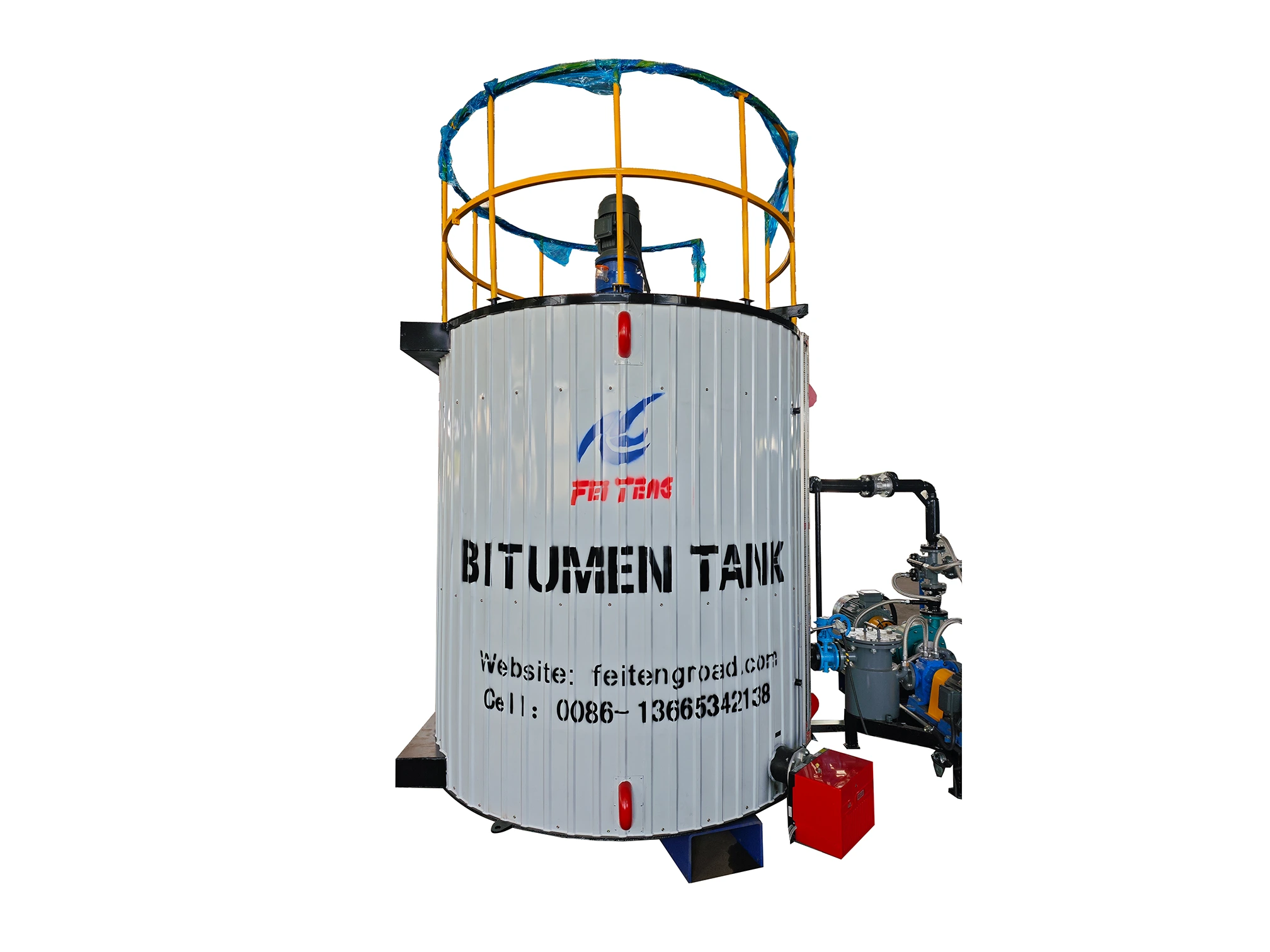
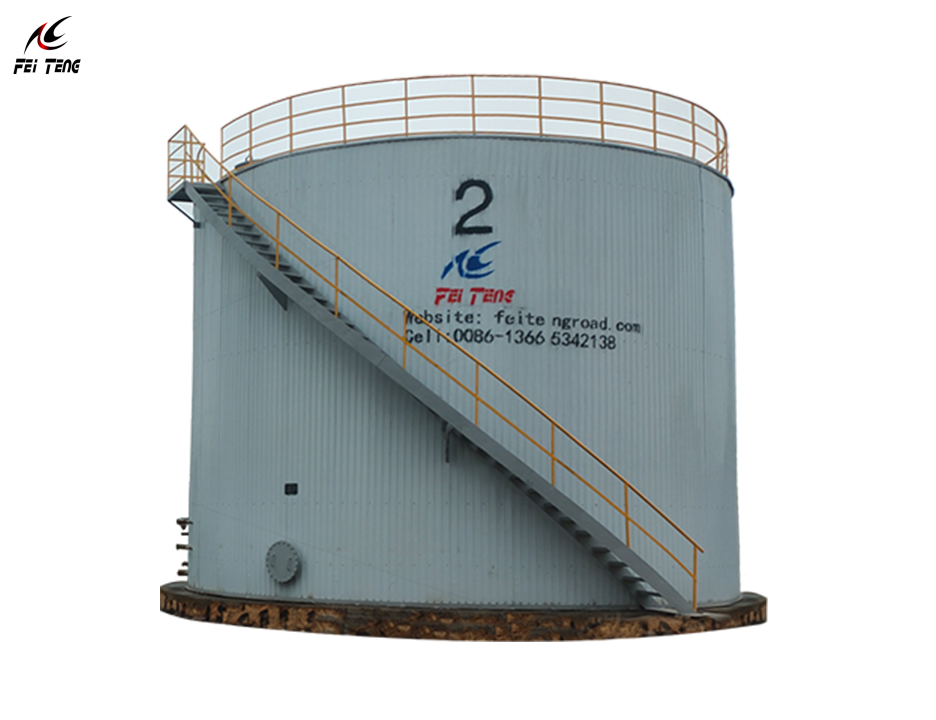
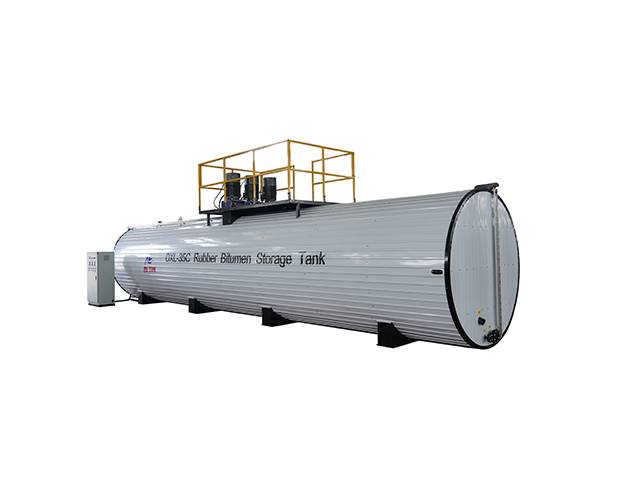
In many international road construction projects, drum-packed bitumen is still widely used because it is easier to transport, store, and handle in areas where bulk bitumen logistics are limited. However, before drum bitumen can be used by an asphalt mixing plant or stored in a heated बिटुमेन भंडारण टैंक, it must be decanted, melted, heated to a pumpable condition, and transferred through a reliable pumping and pipeline system.
This is where buyers usually face one important question: should they choose a self-heating drum bitumen decanter, or an external thermal oil drum bitumen decanter without burner?
The answer depends on whether the job site already has a थर्मल तेल बॉयलर, how much drum bitumen needs to be processed per hour, how compact the system should be, and whether the project requires easy relocation. This article explains the difference between self-heating and external thermal oil drum bitumen decanting systems, and how to choose between equipment types such as YDST, FDLT, और ZDLT series.
Why Heating Method Matters in Drum Bitumen Melting
Bitumen is highly temperature-sensitive. At low temperature, it becomes too viscous to pump. If the drum bitumen melting machine does not provide enough heat, the bitumen may not be completely removed from the drum, the lower melting chamber may not reach the required pumping temperature, and the pipeline may be blocked during transfer.
For a drum bitumen decanter, the heating system affects several key areas:
- How quickly bitumen is released from the drum
- Whether the bitumen can be completely removed with less residue
- How stable the lower chamber temperature is before pumping
- Whether the pipeline and pump can be properly preheated
- How much installation space the complete system requires
- Whether a separate थर्मल तेल बॉयलर is needed
- How easy the system is to transport, install, and relocate
This is why a buyer should not compare drum bitumen decanters only by capacity or price. A 10 t/h machine with the wrong heating configuration may create more site problems than a smaller but better-matched system.
What Is a Self-Heating Drum Bitumen Decanter?
A self-heating drum bitumen decanter integrates the heating source and the drum decanting equipment into one system. In this type of equipment, the machine does not rely on a separate external thermal oil boiler. Instead, it uses its own diesel burner and built-in heating structure to heat the drum bitumen.
For example, the YDST Series Self-Heating Drum Bitumen Decanter is designed as a self-heating integrated drum bitumen decanter. It combines the thermal oil boiler and the drum bitumen decanter into one unit. The system uses a diesel burner as the heat source, and drum bitumen is heated through hot air and thermal oil coils before being melted into liquid bitumen.
A self-heating system is usually suitable when the project site does not already have a thermal oil boiler, or when the contractor wants a compact and movable drum bitumen melting solution. Because the main heating components are integrated into the equipment body, installation can be simpler than building a separate boiler-and-decanter layout.
Typical features of a self-heating drum bitumen decanter
- Built-in diesel burner as the heating source
- Integrated thermal oil heating structure
- Hot air heating and thermal oil coil heating
- Built-in heating furnace or combustion chamber
- Flue heat reuse for improved heat utilization
- Drum tipping or drum feeding structure
- Hydraulic propulsion system
- Bitumen pump and pipeline system
- Automatic temperature control
- Liquid level alarm and electric control system
What Is an External Thermal Oil Drum Bitumen Decanter?
An external thermal oil drum bitumen decanter is different. It does not include a built-in burner. Instead, the equipment uses thermal oil supplied by an external थर्मल तेल बॉयलर or a centralized heating system.
This configuration is often described as a drum bitumen decanter without burner या drum bitumen melting machine without burner. It is especially suitable for asphalt mixing plant sites, bitumen storage bases, or road construction yards that already have a thermal oil boiler.
In this system, thermal oil flows through the heating coils inside the decanter. The upper chamber heats and decants the drum bitumen, while the lower chamber continues heating the melted bitumen to a suitable pumping temperature. The melted bitumen is then pumped to a बिटुमेन भंडारण टैंक or downstream asphalt plant supply system.
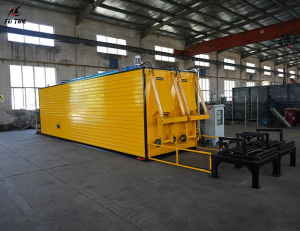
Typical features of an external thermal oil system
- No built-in burner inside the decanter
- Requires external thermal oil boiler or compatible heating source
- Thermal oil coils for indirect heating
- Upper drum decanting chamber and lower melting chamber
- Bitumen pump and heat-traced pipeline connection
- Suitable for sites with existing heating infrastructure
- Can be configured for different drum quantities and capacities
- Often easier to integrate into a larger bitumen storage or asphalt plant system
Key Differences Between Self-Heating and External Thermal Oil Systems
| Comparison Item | Self-Heating Drum Bitumen Decanter | External Thermal Oil Drum Bitumen Decanter Without Burner |
|---|---|---|
| Heating source | Built-in diesel burner | External thermal oil boiler or centralized thermal oil system |
| Typical equipment logic | Heating system and decanter integrated into one unit | Decanter depends on external heat supply |
| Installation requirement | Simpler for sites without existing thermal oil boiler | Better for sites that already have a boiler |
| Site space | Compact integrated layout | Requires space for external boiler and thermal oil pipelines |
| Relocation | Usually more convenient because the heating system is integrated | Depends on external boiler and pipeline layout |
| Capacity expansion | Limited by the built-in heating system | Can be matched with larger external heating systems |
| Best use case | Remote projects, compact systems, contractors without existing boiler | Asphalt plants, bitumen bases, and sites with existing thermal oil boiler |
When to Choose a Self-Heating Drum Bitumen Decanter
ए self-heating drum bitumen decanter is usually the better choice when the project site does not already have a thermal oil boiler. For road construction projects in remote areas, temporary asphalt plant support sites, or contractors that need to move equipment between different projects, an integrated self-heating system can reduce installation complexity.
The YDST series is a good example of this equipment type. It integrates the thermal oil boiler and bitumen decanter, uses a diesel burner as the heat source, and heats drum bitumen through hot air and thermal oil coils. This structure helps reduce the need for a separate boiler, reduces site layout complexity, and supports easier relocation.
You should consider a self-heating drum bitumen decanter if:
- Your project site does not have an existing thermal oil boiler
- You need a compact drum bitumen melting system
- The equipment may need to be moved between different projects
- You want to reduce external boiler installation work
- Diesel fuel is available at the job site
- The required capacity is within the range of the integrated heating system
For many contractors, the main advantage is not only heating performance. It is the fact that the equipment can arrive as a more complete system, with heating, decanting, melting, pumping, temperature control, and alarm functions integrated into the same equipment structure.
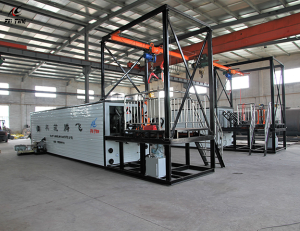
When to Choose an External Thermal Oil Drum Bitumen Decanter Without Burner
एक external thermal oil drum bitumen decanter without burner is more suitable when the site already has a thermal oil boiler. In that case, buying another self-heating machine with a built-in burner may duplicate the existing heating system and increase cost.
For example, the FDLT series uses external thermal oil indirect heating. It is designed for barreled bitumen melting, imported drum bitumen handling at asphalt mixing plant sites, and projects that already have a thermal oil boiler. The system uses thermal oil coils, a decanter tank, bitumen pump and pipeline, hot air circulation, inner circulation, and electric control system to complete the drum bitumen decanting process.
You should consider an external thermal oil drum bitumen decanter if:
- Your asphalt plant or bitumen storage site already has a thermal oil boiler
- You want to avoid duplicated burner equipment
- You need to connect the decanter into an existing heating network
- The project requires continuous drum bitumen decanting
- You prefer centralized heat management for multiple tanks or pipelines
- You want the decanter to work as part of a larger bitumen storage and supply system
In this type of system, the external boiler capacity, thermal oil temperature, pipeline layout, and distance between the decanter and storage tank are very important. The decanter cannot perform well if the external heating source is undersized or if the thermal oil pipeline design causes excessive heat loss.
FDLT vs ZDLT: Two External Heating Systems with Different Project Positions
FDLT और ZDLT are both external thermal oil systems without burner, but they should not be treated as the same product. Their structure, capacity position, and project use can be different.
FDLT: external thermal oil drum bitumen decanter for existing boiler sites
The FDLT-10 Drum Bitumen Decanter Without Burner is a continuous drum bitumen decanter without burner. It is designed for sites that already have a thermal oil boiler. Its production rate is 8–10 t/h, with a 15m³ melting tank volume, 24m³/h bitumen pump flow rate, and thermal oil operation temperature of 200–240°C.
This makes FDLT suitable for contractors and asphalt plant operators that need standard drum bitumen decanting and liquid bitumen transfer, especially when the site already has a thermal oil heating system.
ZDLT-15: higher-capacity drum bitumen melting machine without burner
ZDLT-15 Drum Bitumen Melting Machine Without Burner is also a without-burner drum bitumen melting machine, but it is positioned for higher-volume drum bitumen melting. The ZDLT-15 configuration supports multi-row drum bitumen automatic pushing, decanting, and melting. Its production rate is 10–15 t/h, with a 24m³ tank volume and 45 drums when the drum diameter is 500mm.
ZDLT-15 also includes automatic hydraulic propulsion and automatic drum tipping in its source configuration. It requires an external heating value of about 1,000,000–1,200,000 kcal, which means the external thermal oil heating system must be properly matched before purchase.
YDST vs FDLT vs ZDLT: Practical Selection Guide
| Equipment Type | हीटिंग विधि | Main Position | Typical Capacity | सर्वश्रेष्ठ के लिए |
|---|---|---|---|---|
| YDST Self-Heating Drum Bitumen Decanter | Diesel burner, hot air, thermal oil coils, integrated heating structure | Self-contained drum bitumen melting | 8–10 t/h for YDST-10 | Remote projects, compact layouts, sites without external thermal oil boiler |
| FDLT Drum Bitumen Decanter Without Burner | External thermal oil indirect heating | Continuous drum decanting with existing boiler | 8–10 t/h for FDLT-10 | Asphalt plant sites and bitumen bases with existing thermal oil boiler |
| ZDLT Drum Bitumen Melting Machine Without Burner | External thermal oil heating | Higher-volume multi-row drum melting | 10–15 t/h for ZDLT-15 | High-volume drum bitumen projects requiring automatic pushing and larger drum capacity |
Common Buyer Mistakes When Choosing Drum Bitumen Decanting Equipment
1. Choosing only by hourly capacity
Capacity is important, but it is not the only factor. A 10–15 t/h machine may not reach expected output if the external thermal oil boiler is not powerful enough, if the drum size is different from the design reference, or if the bitumen softening point and ambient temperature are outside the expected operating range.
2. Ignoring the heating source
If the site does not have a thermal oil boiler, buying a without-burner decanter may require additional boiler procurement, installation, piping, and commissioning. If the site already has a thermal oil boiler, buying a self-heating model may duplicate equipment that the project does not need.
3. Assuming all drum decanters have the same structure
Some machines are self-heating. Some require external heating. Some are designed for standard continuous decanting. Others are designed for higher drum quantity and automatic pushing. Even if they all process drum-packed bitumen, their layout and operation logic can be different.
4. Not checking drum diameter
Drum quantity often depends on drum diameter. For example, a machine may be designed around a 500mm drum diameter. If the actual drums are larger or inconsistent, loading quantity and operation efficiency may change.
5. Forgetting pump and pipeline heating
Even if the decanter melts bitumen properly, the system can still fail if the pump, valve, and pipeline are not heated or insulated. Drum bitumen melting should always be considered together with bitumen transfer and storage.
RFQ Checklist Before Ordering
Before requesting a quotation, buyers should prepare technical information instead of only asking for a general price. The more accurate the project data, the easier it is to select the right bitumen melting equipment.
- प्रति घंटे आवश्यक पिघलने की क्षमता
- Drum diameter and drum weight
- Bitumen softening point and packaging condition
- Average local ambient temperature
- Whether the site has an existing thermal oil boiler
- Available fuel type and power supply
- Required heating source capacity
- Distance from decanter to storage tank
- Required bitumen output temperature
- Need for automatic drum tipping or hydraulic pushing
- बिटुमेन भंडारण टैंक capacity and heating method
- Container shipping limits and site layout
- Installation and commissioning support requirements
निष्कर्ष
The right drum bitumen decanter should match the real site heating condition, not only the buyer’s preferred capacity. If the project needs a compact and self-contained system, a self-heating drum bitumen decanter such as YDST can reduce the need for a separate thermal oil boiler and simplify relocation.
If the site already has a thermal oil boiler, an external thermal oil drum bitumen decanter without burner, such as FDLT, can be a practical choice for continuous drum bitumen decanting. For higher-volume projects requiring multi-row drum handling, automatic pushing, and 10–15 t/h capacity, जेडडीएलटी-15 may be more suitable.
In short, buyers should compare heating method, site utilities, drum size, melting capacity, storage tank connection, and project mobility before choosing the final machine. A well-matched drum bitumen decanting system can help maintain stable liquid bitumen supply, reduce downtime, and improve road construction project efficiency.
For complete bitumen handling systems, buyers can also combine a बिटुमेन पिघलने की मशीन with a बिटुमेन भंडारण टैंक, ए थर्मल तेल बॉयलर, heat-traced pipelines, and pumping systems according to project requirements.
Need Help Choosing a Drum Bitumen Decanter?
Tell us your drum size, required melting capacity, heating source condition, power supply, storage tank distance, and project layout. Feiteng can recommend a suitable self-heating or external thermal oil drum bitumen decanting system for your road construction project.
अक्सर पूछे जाने वाले प्रश्न
What is the main difference between a self-heating drum bitumen decanter and an external thermal oil drum bitumen decanter?
A self-heating drum bitumen decanter includes its own heating source, usually a diesel burner and integrated thermal oil heating structure. An external thermal oil drum bitumen decanter does not include a burner and must be connected to an external thermal oil boiler.
When should I choose a self-heating drum bitumen decanter?
You should choose a self-heating system when the project site does not have an existing thermal oil boiler, when a compact integrated system is preferred, or when the equipment may need to be moved between project sites.
When should I choose a drum bitumen decanter without burner?
A without-burner decanter is suitable when the site already has a thermal oil boiler or centralized heating system. It can reduce duplicated burner equipment and integrate with existing thermal oil pipelines.
Is FDLT the same as ZDLT?
No. Both can be external thermal oil systems without burner, but FDLT is positioned as a continuous drum bitumen decanter for existing boiler sites, while ZDLT-15 is a higher-volume drum bitumen melting machine with multi-row drum arrangement, automatic hydraulic propulsion, and larger drum capacity.
What capacity should I choose for drum bitumen melting?
The capacity should be selected according to hourly bitumen consumption, drum size, site temperature, storage tank volume, and asphalt plant production demand. Buyers should not select only by the highest listed capacity.
Does drum diameter affect machine selection?
Yes. Drum quantity and feeding layout may depend on drum diameter. A configuration designed around 500mm drums may need adjustment if the actual drum size is different.
Do I need a bitumen storage tank after the drum decanter?
In most road construction and asphalt plant systems, a बिटुमेन भंडारण टैंक is recommended after the decanter. It provides buffer capacity and helps maintain liquid bitumen temperature before downstream use.
कोटेशन का अनुरोध करने से पहले मुझे कौन सी जानकारी देनी चाहिए?
You should provide drum diameter, required capacity, power supply, heating source condition, fuel availability, site layout, storage tank distance, pipeline requirements, destination port, and whether installation or commissioning support is needed.
 हिन्दी
  English
  Deutsch
  Español
  Tiếng Việt
  العربية
  Français
  Português
  Русский
  বাংলা
বাংলা  Українська
  Bahasa Indonesia
  اردو
اردو