






For international road contractors, a bitumen system must do more than meet its rated production capacity. It must reach the job site, connect to available utilities and support reliable operation throughout the project.
Containerized bitumen equipment can simplify transport and reduce some site assembly work, but the benefits depend on how the equipment is designed. A machine shipped inside a container, a skid-mounted process module and a certified freight-container unit are different configurations. Understanding that distinction helps contractors specify a system that is practical to transport, install and relocate.
This guide explains the engineering features to check when evaluating containerized bitumen decanters, storage systems and heating modules for road projects.
What Does Containerized Bitumen Equipment Mean?
The term “containerized” can describe several arrangements. Before comparing equipment, ask the supplier to identify the proposed configuration and provide both shipping and operating drawings.
| Configuration | What it means | What to verify |
|---|---|---|
| Container-shippable equipment | The machine or its dismantled sections travel as cargo inside a freight container. | Packed dimensions, door clearance, weight, securing points and site reassembly work. |
| Skid-mounted or container-frame module | Process equipment is assembled on a structural base or within a frame. | Approved lifting method, support loads, transport arrangement and operating clearances. |
| Equipment integrated into a freight-container unit | The enclosure or frame is intended to function as the transport unit itself. | Applicable container approval, structural condition, permitted gross mass and carrier acceptance. |
Standard-looking dimensions and corner fittings alone do not establish transport approval. The IMO Convention for Safe Containers addresses container testing and structural safety. Where equipment is offered as a freight-container unit, request the applicable approval and inspection documentation rather than relying on the word “ISO” in a quotation.
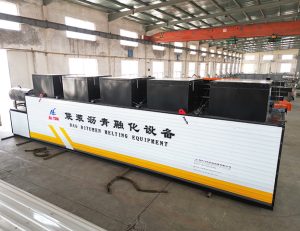
1. More Practical Transport Planning
Equipment designed for standard container loading may reduce dependence on out-of-gauge transport. It can also make packing, handling and onward transport easier to plan. However, a standard container shipment is only feasible when the complete packing arrangement meets the selected container’s dimensional and loading limits.
- Check the loading envelope: internal dimensions and door openings matter, not only external container dimensions.
- Check the complete shipment: include burners, chimneys, platforms, pumps, control cabinets and loose accessories.
- Check weight distribution: total mass, concentrated loads and securing arrangements all affect loading feasibility.
- Check the inland route: trailer configuration, road access, bridges and local transport requirements still need review.
Compare total delivered and installed cost, including packing, freight, destination handling, inland haulage, unloading and reassembly. Avoid assuming a fixed saving percentage: the result depends on the route, equipment configuration and current quotations.
2. Less Site Assembly Through Defined Interfaces
A well-designed module can arrive with selected piping, instruments and electrical components already installed. This reduces the number of connections that must be fabricated on site and can make commissioning easier to organize.
The useful question is not whether the system is described as “plug-and-play,” but which activities remain after delivery. The supplier’s scope should identify installed components, shipping removals, external connections and the checks required before startup.
- Bitumen inlet, outlet and circulation connections.
- Thermal oil supply and return connections, where applicable.
- Electrical supply, earthing and control interfaces.
- Fuel supply, combustion air and exhaust arrangements for burner-fired equipment.
- Instrumentation, emergency stops and commissioning responsibilities.
A structural skid transfers equipment loads to the supports below it; it does not remove the need for an engineered support arrangement. Ground conditions, operating weight, anchorage and local site requirements determine whether foundations or other prepared supports are necessary. Installation duration should follow the approved scope and site-readiness plan.
3. Easier Relocation When Designed for Repeated Moves
For temporary asphalt production sites, modular equipment can reduce dismantling work between projects. Accessible connections, clearly marked interfaces and documented lifting points are particularly useful when the same system will move several times.
Relocation must nevertheless follow the manufacturer’s shutdown and transport procedure. Confirm cooling, draining or retained-material limits, isolation, disconnected pipe protection and transport restraints before lifting.
Use the specified lifting points and approved rigging arrangement for the actual transport mass and centre of gravity. Corner fittings must not be treated as authorized lifting points unless the equipment documentation explicitly permits their use.
Do not assume that containerized storage tanks can be stacked for operation. Transport stacking and operating a heated, filled tank in a stacked arrangement are different design cases. Any proposed stacking requires specific structural approval, support details and safe access provisions.
4. Protection That Matches the Operating Environment
An enclosed module can help shield selected components from rain, dust and accidental damage. Lockable access panels may also improve security when the equipment is unattended. These benefits depend on the enclosure design and the components actually housed inside it.
For exposed or coastal sites, specify the required corrosion protection, drainage and electrical enclosure ratings. For heating equipment, confirm ventilation, combustion-air supply, exhaust routing and maintenance access. An enclosure must not obstruct the airflow or clearances required by the burner and other installed equipment.
Match the Module to the Complete Bitumen System
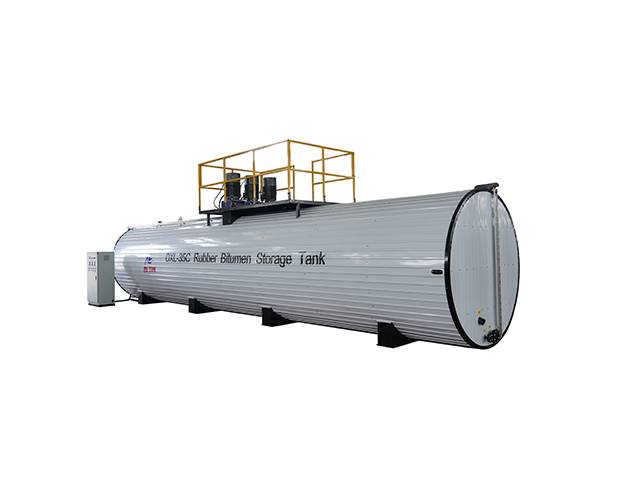
Transport convenience should support the process duty. A compact decanter still needs sufficient melting output, a storage module needs usable capacity, and the heating system must meet the required startup and operating duties.
Review the equipment as a connected system:
- Incoming bitumen format and required melting or unloading rate.
- Usable storage capacity and production buffer.
- Heating duty and available energy supply.
- Pump duty, transfer distance and pipeline heating.
- Space for loading, maintenance and future relocation.
For the wider process layout, read our guide to designing a complete bitumen handling system for an asphalt mixing plant.
FEITENG Equipment and Project Configuration
FEITENG FDLT Series automatic bitumen drum decanter product page lists a 1 × 40HQ shipping arrangement. For a specific order, confirm the packing drawing, included accessories and reassembly requirements. Container-shipping suitability does not by itself mean the machine operates inside a certified freight container.
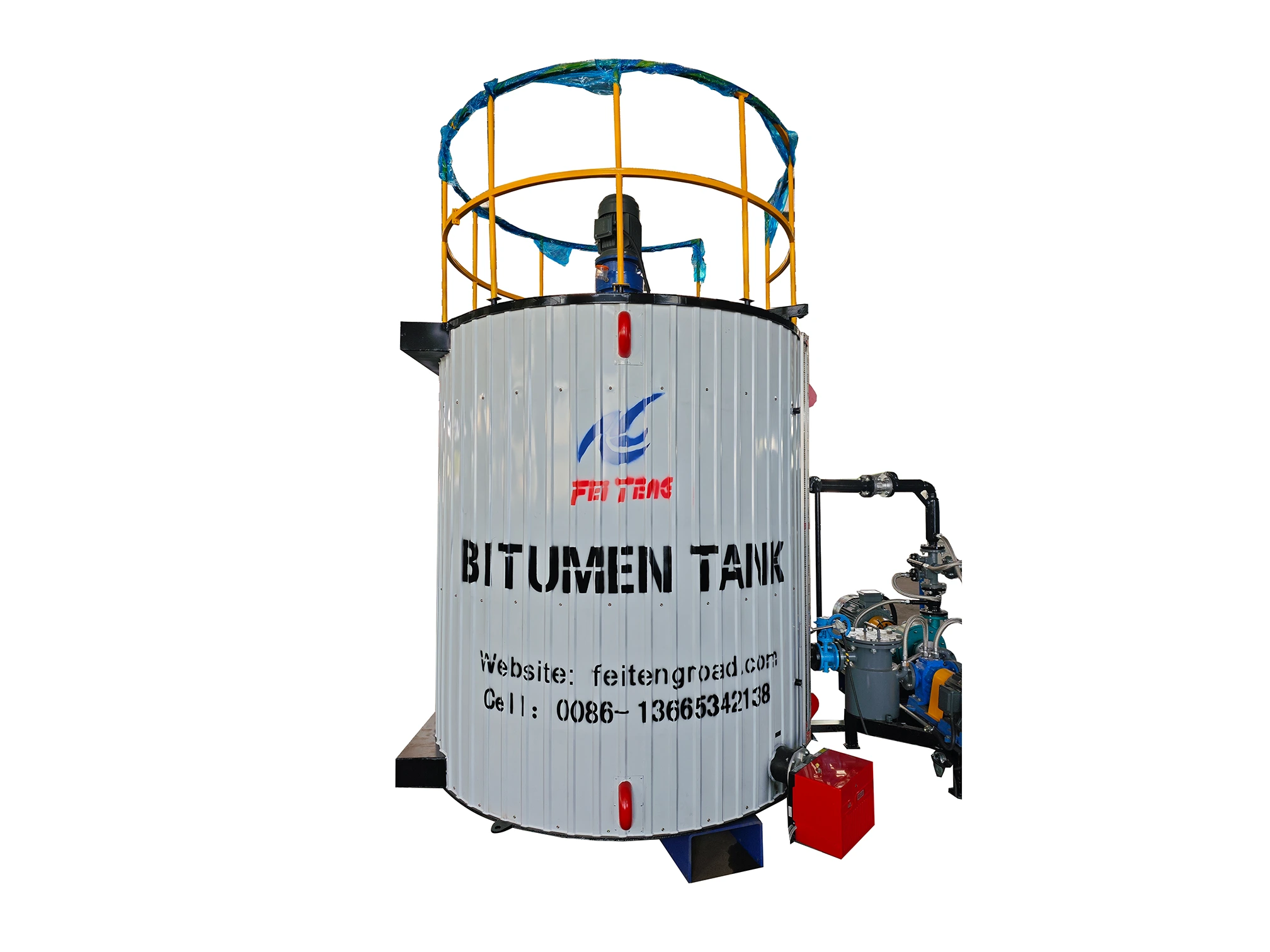
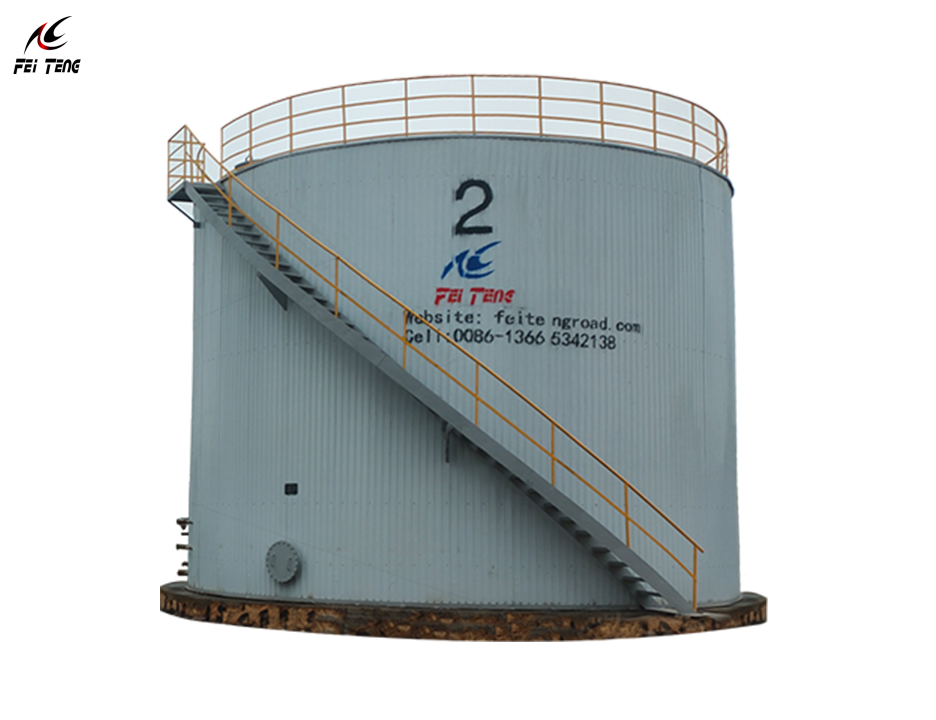
Storage configurations also differ. FEITENG’s 500 m³ vertical bitumen storage tank is described as a container-shipped site-assembly kit requiring site construction. It illustrates why containerized delivery should not be confused with a fully assembled, immediately operational tank.
Perguntas mais frequentes
Does containerized bitumen equipment always cost less to ship?
No. It may reduce out-of-gauge handling, but total cost depends on shipment size, weight, routing, packing and destination charges. Compare quotations for the actual packing configuration.
Can containerized equipment be installed without a concrete foundation?
That depends on the approved support design and site conditions. Request operating loads and support requirements before preparing the site.
Can a containerized bitumen tank travel while full?
Do not assume so. A stationary storage tank may not be designed or approved for loaded transport. Confirm the permitted transport condition, material temperature, mass and applicable transport requirements for the exact unit.
Is containerized equipment suitable for every asphalt plant?
No. It is worth evaluating where transport access or relocation matters, but production duty, storage requirements and site layout may favor another configuration.
Discuss Your Project with FEITENG
Send FEITENG your destination, bitumen supply format, required melting capacity, usable storage requirement, available power and fuel, site layout and expected relocation frequency. Include any container-loading restrictions so the proposed process and shipping arrangements can be reviewed together.
Request a project-specific equipment proposal:
E-mail: [email protected]
WhatsApp: +86 15335447006
 Português
  English
  Deutsch
  Español
  Tiếng Việt
  العربية
  Français
  Русский
  हिन्दी
  বাংলা
বাংলা  Українська
  Bahasa Indonesia
  اردو
اردو