






Why Heating Method Matters in a Diesel Burner Bitumen Storage Tank
For asphalt mixing plants and road construction projects, a bitumen storage tank is not only a container for keeping bitumen. Its heating method directly affects bitumen temperature recovery, pumping stability, pipeline flow, fuel consumption, and the reliability of downstream equipment.
When buyers compare different diesel burner bitumen storage tanks, they often focus first on tank capacity, steel thickness, pump size, and price. These are important, but the heating system is often the factor that decides whether the tank can work smoothly on site. If the heating method is not suitable for the project, bitumen may become difficult to pump, pipelines may become blocked, and the asphalt plant may face unstable bitumen supply.
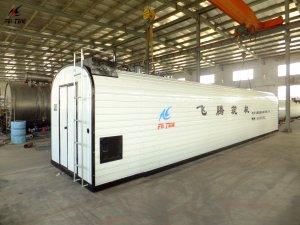
This article explains why the heating method matters in a diesel burner bitumen storage tank, how diesel direct heating and thermal oil circulation work together, and what buyers should confirm before ordering this type of equipment.
Why Bitumen Storage Tanks Need More Than Simple Heat Preservation
Bitumen is highly temperature-sensitive. At a suitable working temperature, it can be pumped and supplied to an asphalt mixing plant, emulsion bitumen system, modified bitumen equipment, or rubber bitumen production line. But when the temperature drops too low, bitumen becomes highly viscous and may even solidify inside pipelines, pumps, or valves.
For this reason, a bitumen storage tank must do more than store material. It needs to maintain bitumen at a pumpable temperature, recover heat after unloading, reduce cold zones inside the tank, and protect the transfer pipeline from blockage. This is why the heating method becomes a key technical factor in tank selection.
Diesel Direct Heating vs Thermal Oil Indirect Heating
In a diesel burner bitumen storage tank, diesel direct heating usually means that a diesel burner heats a combustion chamber and flue tube system installed inside or around the tank. Heat is transferred from the hot flue structure into the bitumen. This method can provide strong heat input and is useful when the site does not want to rely on an external thermal oil boiler.
Thermal oil indirect heating works differently. Thermal oil is heated and circulated through coils, jackets, pipelines, or heat-tracing sections. Instead of exposing the bitumen heating area only to burner flue heat, the thermal oil system distributes heat through a controlled circulation loop. This helps protect pumps and pipelines and improves the overall heat management of the storage system.
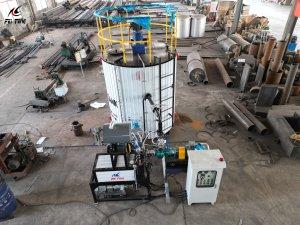
For many road construction projects, the best solution is not choosing only one method, but combining both. A double heating bitumen storage tank can use diesel direct heating for main tank heating and thermal oil indirect heating for internal heat transfer, pump protection, and pipeline heat tracing. When the project already has a central thermal oil boiler, the tank layout should also be matched with the site’s heat-transfer oil system.
How Double Heating Improves Temperature Recovery
When cold or semi-heated bitumen is loaded into a tank, the stored material temperature may drop. If the heating system is weak, the tank may need a long time to recover to the required working temperature. This affects the operation schedule of the asphalt plant or bitumen processing system.
For projects that require direct melting from drums or bags, buyers may also compare this tank system with a bitumen melting machine with burner or other dedicated bitumen decanting systems. A storage tank is mainly used for heated storage and supply, while a melting machine is designed to convert packaged bitumen into pumpable liquid bitumen.
A double heating structure improves this situation by increasing the available heat transfer routes. The diesel burner provides direct heat through the combustion chamber and flue tubes, while the thermal oil system circulates heat through coils or heat-tracing lines. This heating matrix helps the tank recover temperature more effectively than a simple insulated storage tank.
For example, a 42m³ diesel burner bitumen storage tank such as the YDL-40F configuration uses diesel direct heating together with thermal oil indirect heating. This type of structure is suitable for projects that require heated storage, unloading, internal circulation, external supply, and pipeline heat tracing in one integrated system.
Why Internal Circulation Reduces Cold Zones
Another important factor is bitumen circulation. Even if the heating system is powerful, the temperature inside the tank may not be completely uniform. Areas close to the heating tubes may become hotter, while remote areas may remain cooler. These cooler areas are often called cold zones.
Internal circulation helps reduce this problem. The bitumen pump circulates material inside the tank, allowing heat to be distributed more evenly. This is especially important before the tank supplies bitumen to downstream equipment.
In a properly designed diesel burner bitumen storage tank, the bitumen pump can often support multiple functions: unloading bitumen into the tank, circulating bitumen internally, and supplying bitumen externally. This multi-function pump layout makes the system more practical for asphalt plant operation and road construction projects. If the project uses bagged bitumen as the main raw material, a separate bag bitumen melting equipment may be required before the liquid bitumen enters the storage system.
The Role of Pipeline Heat Tracing in Bitumen Transfer
Many bitumen transfer problems do not happen inside the tank. They happen in the pipeline between the tank and the asphalt mixing plant, emulsion bitumen equipment, modified bitumen equipment, or rubber bitumen system.
When the pipeline is not heated properly, bitumen may cool down during transfer. This increases viscosity and can cause slow flow, pump overload, valve blockage, or complete pipeline blockage. Restarting a blocked bitumen pipeline can take significant time and labor.
This is why thermal oil pipeline heat tracing is an important feature. By circulating hot thermal oil around or along key pipeline sections, the system keeps the bitumen transfer path warm before and during operation. For sites with long transfer distances, outdoor pipelines, or intermittent production schedules, pipeline heat tracing can greatly improve operating reliability.
Key Parameters Buyers Should Check Before Ordering
Before purchasing a diesel burner bitumen storage tank, buyers should not only ask for the tank volume and burner brand. They should also confirm the complete heating and transfer configuration.
Important RFQ points include:
- Required bitumen storage capacity
- Heating method: diesel direct heating, thermal oil indirect heating, or double heating
- Heating rate under normal ambient temperature
- Maximum bitumen working temperature
- Thermal oil working temperature range
- Burner model and fuel type
- Bitumen pump model and throughput
- Whether the pump supports unloading, circulation, and external supply
- Pipeline diameter and valve configuration
- Thermal oil heat-tracing pipeline size
- Electrical components and control hardware brand
- Temperature sensor and level gauge configuration
- Tank steel plate thickness and insulation structure
- Power supply voltage and frequency
- Container loading and site installation limits
These details help buyers avoid unclear quotations and reduce the risk of receiving a tank that does not match the real site conditions. For comparison, electric-heating configurations such as electric heating bitumen storage tanks may be more suitable for projects where fuel supply is limited but stable electrical power is available.
Example Configuration: 42m³ Diesel Burner Bitumen Storage Tank
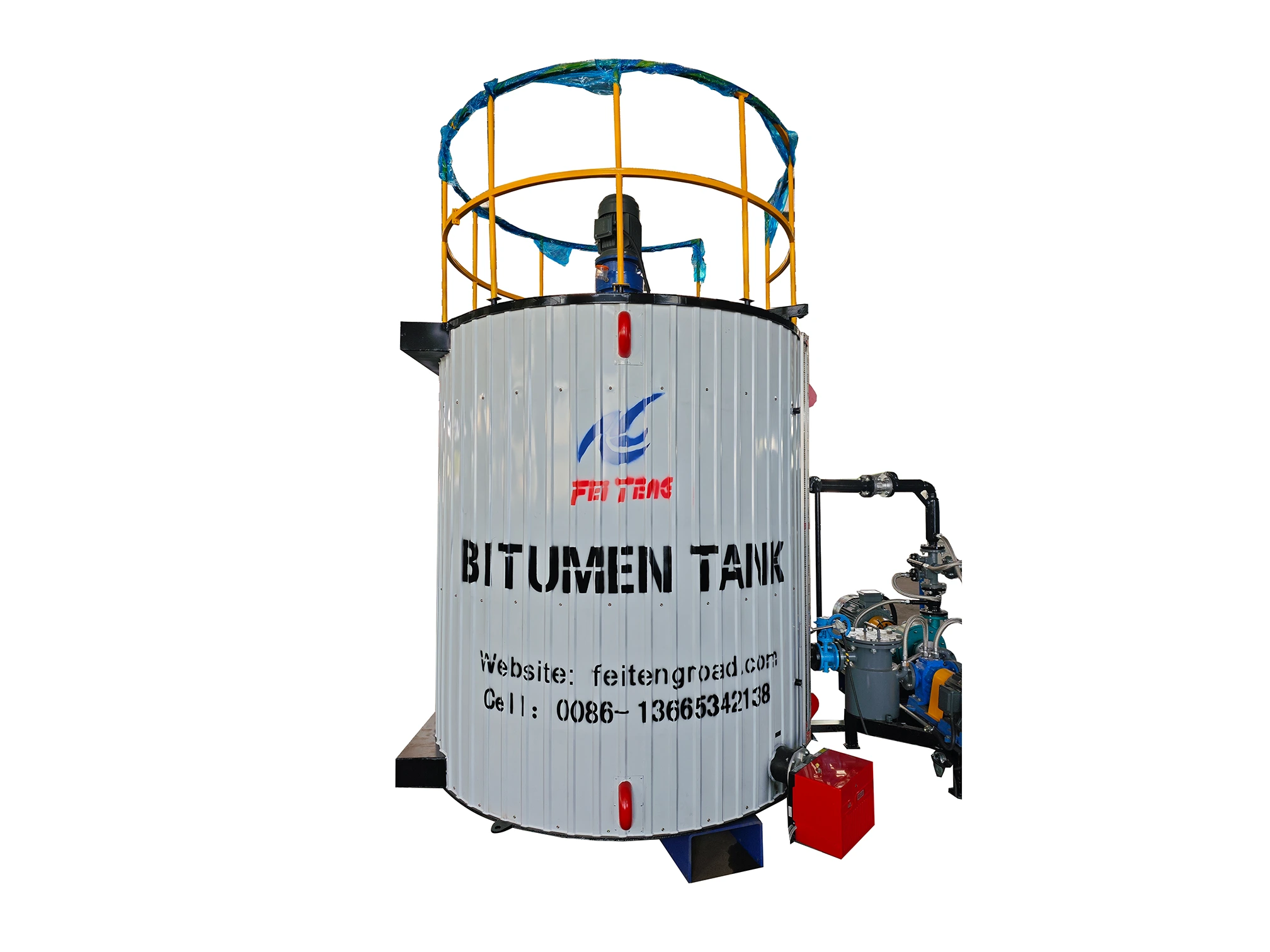
A typical heavy-duty diesel burner bitumen storage tank may include a square tank body, integrated base, diesel burner, combustion chamber, flue tubes, thermal oil heating coils, insulated bitumen pump, thermal oil circulation pump, expansion tank, automatic temperature control system, level gauge, unloading trough, and pipeline preheating system.
For example, the YDL-40F configuration uses a 42m³ tank volume, diesel direct heating and thermal oil indirect heating, a Baltur TBL 60P diesel burner, a 16.8m³/h insulated bitumen pump, and a 200–240°C thermal oil working temperature range. The tank body uses 5mm steel plate, with 8mm end plates, a 12mm combustion chamber, Φ159 seamless steel heating tubes, 50mm rock wool insulation, and Schneider electrical components.
This kind of configuration is more suitable for engineering buyers who need an integrated tank rather than a simple storage vessel. It supports asphalt mixing plant supply, bitumen processing systems, and job sites requiring heated unloading, internal circulation, external supply, and pipeline heat tracing. For projects using drum bitumen as the feedstock, buyers can also combine the storage tank with an automatic bitumen drum melting machine to build a complete bitumen melting, storage, and supply workflow.
Conclusion
The heating method is one of the most important technical decisions when selecting a diesel burner bitumen storage tank. Diesel direct heating provides strong heat input, while thermal oil indirect heating improves heat distribution, pump protection, and pipeline heat tracing. When both methods are combined, the tank can provide a more complete heating and transfer solution for road construction projects.
For asphalt mixing plants, emulsion bitumen systems, modified bitumen production, and rubber bitumen equipment, buyers should evaluate not only tank capacity, but also heating logic, circulation design, pump configuration, temperature control, pipeline heat tracing, and export installation requirements. A well-designed bitumen storage tank helps keep the entire bitumen supply system stable, efficient, and easier to operate on site.
FAQ
What is a diesel burner bitumen storage tank?
It is a heated bitumen storage tank that uses a diesel burner as the main heat source. It is used to store bitumen and keep it at a pumpable temperature for asphalt mixing plants or bitumen processing systems.
Why is thermal oil used in a bitumen storage tank?
Thermal oil helps transfer heat more evenly and can also be used for pump and pipeline heat tracing. This reduces the risk of bitumen cooling and blocking pipelines during transfer.
Is double heating better than single heating?
Double heating is useful when the project requires faster temperature recovery, internal circulation, external supply, and pipeline heat tracing. The best choice depends on project capacity, site layout, climate, and downstream equipment requirements.
What causes bitumen pipeline blockage?
Pipeline blockage usually happens when bitumen temperature drops too low, causing viscosity to increase. Poor insulation, long transfer distance, no heat tracing, or intermittent operation can increase the risk.
What should buyers confirm before ordering a bitumen storage tank?
Buyers should confirm tank volume, heating method, burner model, pump capacity, thermal oil temperature, pipeline layout, control hardware, power supply, insulation, container loading, and site installation requirements.
 English
  Deutsch
  Español
  Tiếng Việt
  العربية
  Français
  Português
  Русский
  हिन्दी
  বাংলা
বাংলা  Українська
  Bahasa Indonesia
  اردو
اردو