








When a bitumen pump delivers less flow than expected, check the complete transfer system before choosing a larger pump. Start by confirming the actual flow measurement, material condition, suction arrangement, discharge route and operating speed. A motor that is running does not establish that the required quantity of binder is reaching the destination.
This guide helps asphalt plant owners and maintenance teams prepare a structured investigation of hot bitumen transfer. It is a data-collection and engineering-review checklist, not a procedure for opening, adjusting or restarting a hot system. Use the installed equipment manuals and site isolation procedures for maintenance work.
1. Define the Flow Problem Before Changing Equipment
Describe the symptom precisely. Is the flow always below the required rate, unstable during a transfer, or satisfactory at first and then declining? Does it happen only after startup, after a binder change or when another line is operating?
Compare the current run with a previously satisfactory run where possible. Record the same material, measurement points and operating task. A tanker-unloading duty and an asphalt-plant feed duty should not be assessed as though they were the same transfer.
- Required flow and the process that establishes it.
- Actual measured flow, instrument location and measurement interval.
- Binder grade, material temperature and available supplier viscosity data.
- Source-tank level and destination operating condition.
- Pump model, drive arrangement and recorded operating speed.
- Recent maintenance, pipework changes or operating changes.
If the original duty has not been defined, use our bitumen pump flow rate calculation guide to prepare the demand calculation. A calculated flow requirement is the starting point for a pump assessment, not proof that a particular installed pump will achieve it.
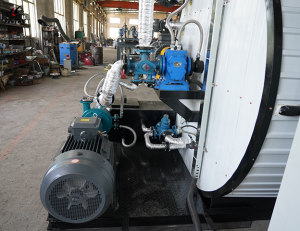
2. Confirm That the Measurement Represents Delivered Flow
Ask how the reported flow was established. Is it a flowmeter reading, a pump rating from a catalogue, or an estimate from tank-level change? Record whether material is circulating, returning through another route or being withdrawn at the same time.
Where tank level is used to estimate a transfer, ask the project team to check the tank calibration, reading interval and other incoming or outgoing streams. Where mass and volume are compared, identify the density and temperature basis used.
Request an appropriate measurement check before treating a changed indication as a changed pump output. Include the instrument identification and its service history in the investigation file.
3. Review Material Condition and Heating Coverage
Record the material condition at the locations already provided by the installation. A tank temperature reading alone does not establish conditions at the pump inlet, valves and connecting line. Ask the maintenance team to review the heating coverage and relevant operating records against the approved installation.
Provide the binder supplier’s handling guidance and the actual grade being transferred. Do not select a universal pumping temperature or increase a setpoint solely because flow has fallen. The acceptable operating range must be checked for the material and installed equipment.
For background on temperature-controlled pumping of viscous materials, see Viking Pump’s asphalt pump information. It is manufacturer background for that product family, not a specification or approval for a FEITENG installation.
4. Review the Suction Side as a Complete Path
Show the source tank, suction pipework and pump inlet on the current drawing. Give the reviewer the available tank-level records, pipe dimensions, route and fitting information. Ask whether the operating arrangement differs from the design or commissioning condition.
- Does the symptom change as the source tank level changes?
- Has the suction route, pipework or valve arrangement been modified?
- Are there inspection or maintenance records for the installed strainers?
- Has the material grade or operating condition changed?
- Are unusual noise, vibration or leakage reported?
Viking Pump discusses viscosity, supply conditions and inlet restrictions in its cavitation guidance. These are possible investigation areas, not a diagnosis from noise alone. Have a qualified technician interpret the evidence for the actual pump.
Do not open a hot strainer, disconnect a suction line or alter a valve arrangement as a trial fix. Any physical inspection must follow the installation’s approved shutdown, isolation and maintenance procedure.
5. Check the Discharge Route and Possible Return Paths
Identify the destination and every operating branch associated with the transfer. Ask the reviewer to compare available pressure readings, their locations and the valve arrangement with the approved drawing. Record whether the problem began after a route change or when another consumer started operating.
Confirm where any bypass or return line leads and what its intended function is. Do not assume that closing a return path or raising a relief setting will restore usable flow. Protective devices and control arrangements must remain subject to the pump and system manufacturer’s requirements.
For pipework design inputs, refer to our bitumen pipeline diameter guide. A pipe-size change needs a system review; it should not be selected from one flow reading.
6. Compare Drive and Pump Condition with the Original Selection
Provide the nameplate information, drive details and pump selection records. Ask a qualified technician to establish the actual operating speed and compare it with the documented duty. Include available motor-load records, service history and the timing of any performance change.
If replacement or refurbishment is proposed, ask the supplier to explain the evidence behind the recommendation and the conditions the proposed pump must meet. Do not increase drive speed, change motor wiring or bypass a protective function based on a general troubleshooting article.
7. Use a Symptom-and-Evidence Checklist
| Observed pattern | Useful records | Question for the reviewer |
|---|---|---|
| Flow is low from startup | Material condition, heating record, source level and startup sequence. | Were the documented starting conditions established? |
| Flow declines during the transfer | Flow trend, tank-level trend, temperatures and route changes. | Which operating condition changed as the flow fell? |
| Flow varies when another branch runs | System drawing and the timing of connected equipment operation. | How are the transfer routes and shared services interacting? |
| Flow changed after maintenance | Work records, replaced components and commissioning checks. | Does the current arrangement match the approved configuration? |
| Readings disagree | Instrument details, measurement interval and simultaneous transfers. | Are the measurements describing the same quantity and period? |
The table organizes evidence. It does not identify a single cause or authorize continued operation when equipment shows abnormal behaviour. Follow the site’s response procedure and obtain qualified assistance.
8. Prepare a Useful Service or Upgrade Enquiry
Send a concise operating record rather than only a message saying “the pump is too small.” Include the pump identification, binder data, required and measured flow, available temperatures and pressures, source and destination details, a current pipework sketch and the relevant service history.
Ask the supplier to distinguish between restoring the original duty and changing the duty. Higher plant demand, a longer transfer route or a new binder can require a different assessment from deterioration under unchanged conditions.
Review the system relationship in our complete bitumen handling system guide. Storage, heating, transfer and asphalt production should be assessed together.
Frequently Asked Questions
Does low flow always mean the pump is undersized?
No single flow reading establishes that conclusion. Confirm the required duty, delivered-flow measurement and operating conditions, then ask for a complete pump and system assessment.
Should I raise the temperature to improve flow?
Do not change operating limits from this article. Provide the actual binder data and heating records so the material supplier and equipment specialist can review the permitted operating conditions.
What information should I send FEITENG?
Provide the equipment model, binder grade, required flow, measured-flow record, available operating readings, layout and recent changes. Use the enquiry form on this website to request a review of the transfer arrangement and proposed equipment scope.
 English
 Deutsch
 Español
 Tiếng Việt
 العربية
 Français
 Português
 Русский
 हिन्दी
 বাংলা
 Українська
 Bahasa Indonesia
 اردو