






An asphalt mixing plant may be rated for 80, 120, 160, or even 240 tons of asphalt per hour, but that production capacity means very little if the bitumen supply system cannot keep up.
This is a problem many contractors discover only after installation.
The asphalt plant itself may have sufficient production capacity, while the bitumen system suffers from slow drum melting, insufficient storage, undersized heating capacity, cold pipelines, unstable pump flow, or poor coordination between different pieces of equipment.
The result is simple: the asphalt plant waits for bitumen.
A reliable bitumen handling system should therefore be designed as one complete process:
Bitumen Receiving → Melting or Unloading → Heating → Storage → Circulation → Pumping → Asphalt Mixing Plant
This guide explains how contractors, asphalt plant owners, and EPC companies can configure that system according to asphalt production capacity, bitumen packaging, heating conditions, storage requirements, and site layout.
What Is a Bitumen Handling System?
A bitumen handling system is the group of equipment used to receive, melt or unload, heat, store, circulate, and transfer bitumen before it enters an asphalt mixing plant or another downstream process.
Depending on the project, the system may include:
- Bitumen drum decanter
- Bag bitumen melting machine
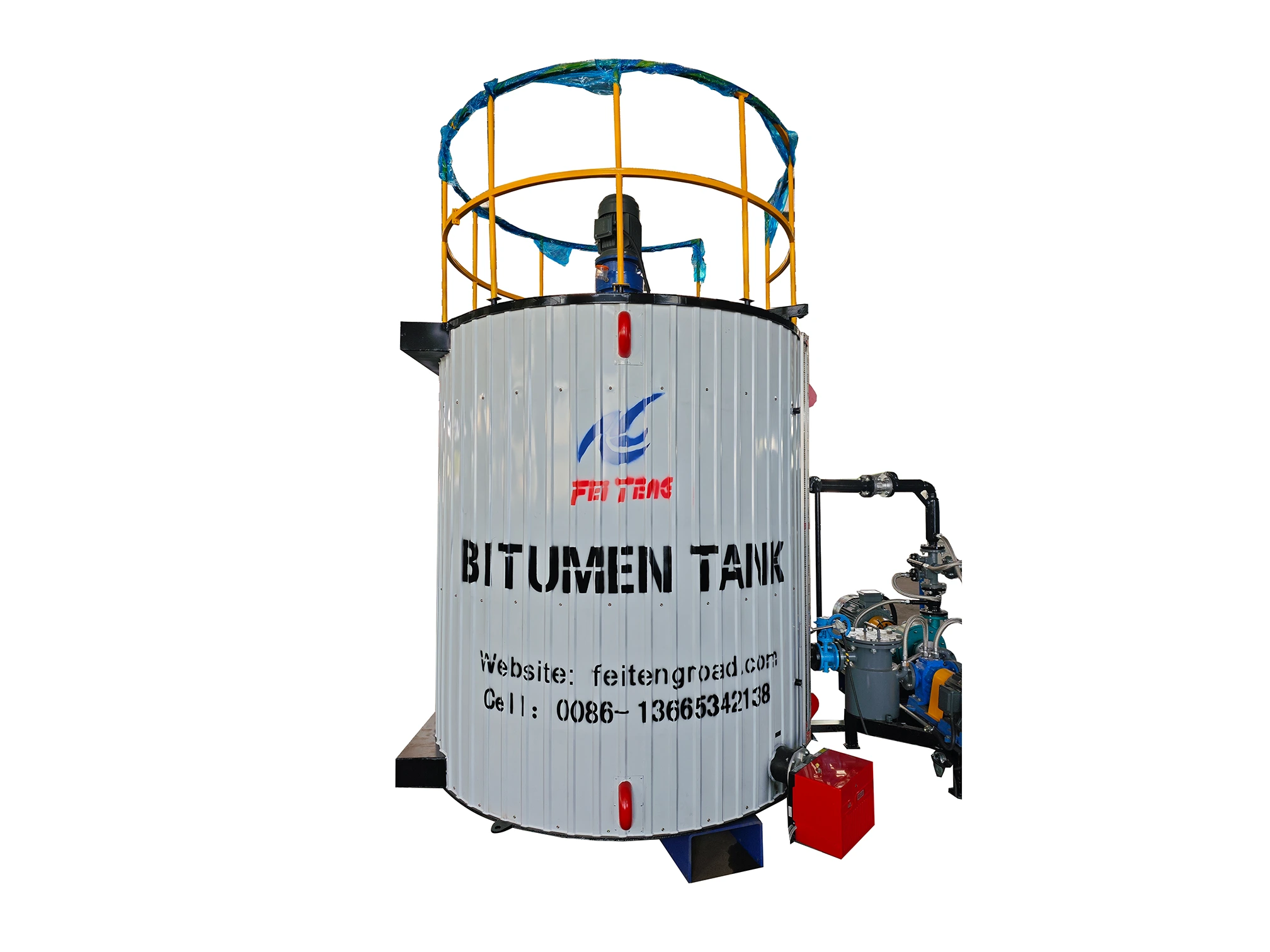
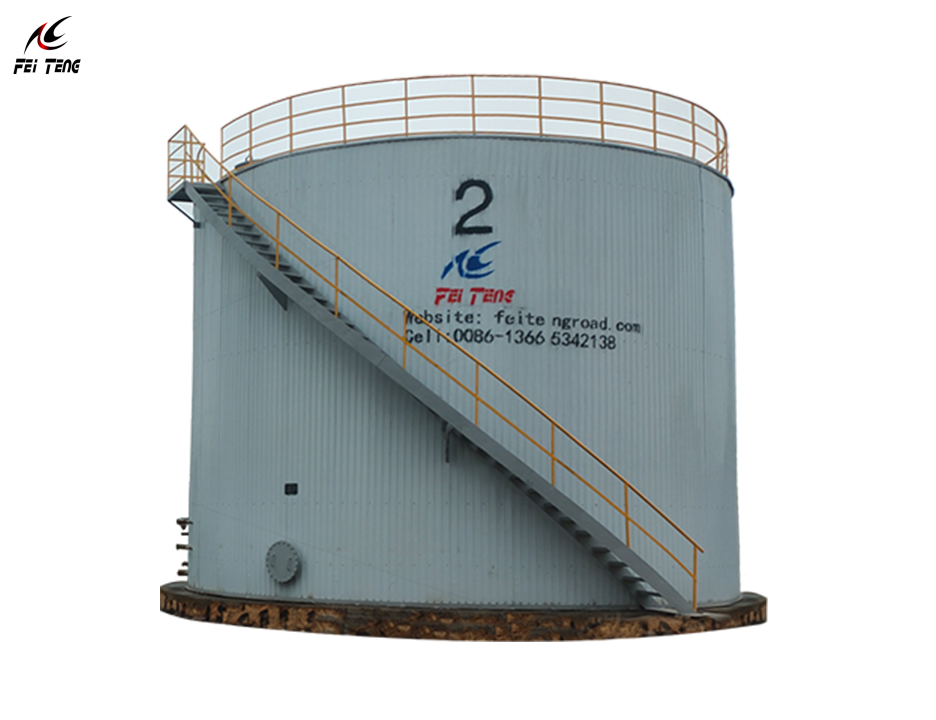
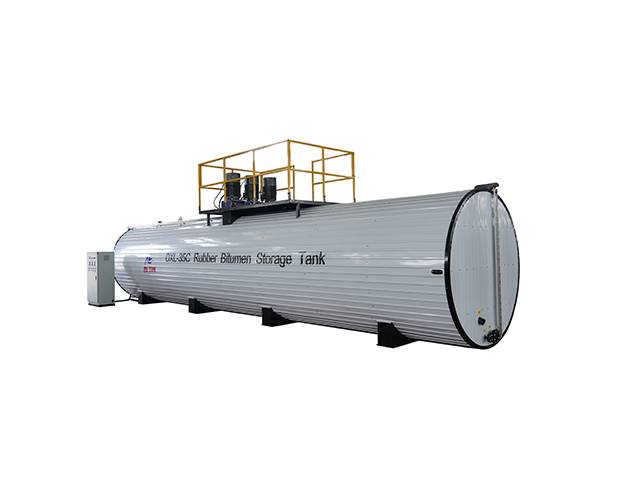
- Heated bitumen storage tanks
- Thermal oil boiler
- Bitumen transfer pumps
- Heated pipelines and valves
- Bitumen filters
- Circulation pipelines
- Temperature and level controls
- Modified bitumen or emulsion equipment
Not every project requires every machine.
The correct configuration depends first on how bitumen arrives at the construction site.
Step 1: Start with the Bitumen Supply Format
Before selecting tank capacity or heating power, determine the incoming bitumen format.
This decision changes almost the entire upstream system.
Bulk Liquid Bitumen
If hot liquid bitumen arrives by tanker, a melting machine is normally unnecessary.
A typical system becomes:
Bitumen Tanker → Storage Tank → Circulation/Pump System → Asphalt Plant
The main engineering requirements are:
- Fast unloading
- Sufficient storage capacity
- Reliable temperature maintenance
- Heated pumps and pipelines
- Adequate thermal oil capacity
Bulk supply is efficient when the project has reliable access to a refinery, terminal, or local bitumen supplier.
However, it becomes more difficult for remote projects where hot bitumen cannot be delivered continuously.
Drum-Packed Bitumen
Steel drums remain common for overseas highway projects and remote construction sites.
In this case, the process becomes:
Bitumen Drums → Drum Decanter → Heated Storage Tank → Pump → Asphalt Plant
A drum bitumen decanter heats the drums and separates the bitumen from the steel packaging.
Depending on the site, contractors can choose between:
- Self-heating drum bitumen decanters
- External thermal-oil-heated drum decanters
- Automatic drum tipping or hydraulic feeding systems
The important point is that the decanter capacity must match the actual bitumen consumption of the asphalt plant.
A large asphalt plant supplied by an undersized decanter will eventually experience production interruptions.
Related guide: Self-Heating vs External Thermal Oil Drum Bitumen Decanter.
Jumbo Bag Bitumen
For bitumen supplied in 1-ton jumbo bags, a dedicated bag bitumen melting machine is normally required.
The system becomes:
Jumbo Bags → Bag Bitumen Melter → Storage Tank → Pump → Asphalt Plant
Large solid bitumen blocks cannot be efficiently processed in an ordinary storage tank because the heat transfer area is too limited.
A dedicated melting chamber increases contact between the solid bitumen and the heating surfaces, allowing the material to melt continuously before entering the storage system.
Step 2: Calculate the Asphalt Plant’s Bitumen Demand
The next question is:
How much bitumen does the asphalt plant actually consume?
A simple preliminary calculation is:
Hourly Bitumen Demand = Asphalt Plant Output × Bitumen Content
For example:
If an asphalt plant produces:
160 tons of asphalt per hour
and the mix contains:
5% bitumen
then:
160 × 5% = 8 tons of bitumen per hour
The bitumen system therefore needs to support approximately 8 t/h of binder consumption during full-load operation.
This calculation immediately affects:
- Melting machine capacity
- Pump flow
- Pipeline diameter
- Storage capacity
- Heating capacity
Example Reference
| Asphalt Plant Capacity | Bitumen Content | Approx. Bitumen Demand |
|---|---|---|
| 80 t/h | 5% | 4 t/h |
| 120 t/h | 5% | 6 t/h |
| 160 t/h | 5% | 8 t/h |
| 200 t/h | 5% | 10 t/h |
| 240 t/h | 5% | 12 t/h |
These figures are preliminary engineering references rather than universal design values.
Actual demand depends on the asphalt mix design and production schedule.
Step 3: Do Not Match Melting Capacity Exactly to Consumption
Suppose the asphalt plant consumes 8 t/h of bitumen.
Should you simply install an 8 t/h drum decanter?
Not necessarily.
Real production conditions are rarely identical to nameplate conditions.
Melting performance may be affected by:
- Ambient temperature
- Initial bitumen temperature
- Drum dimensions
- Bitumen grade
- Heating-medium temperature
- Operator efficiency
- Feeding interruptions
- Residue inside drums
- Thermal oil boiler performance
For this reason, the storage tank should act as a buffer between melting and consumption.
Instead of forcing the melting machine to follow every short-term fluctuation of the asphalt plant, the system can melt bitumen into storage continuously while the asphalt plant draws from the tank as required.
This greatly improves operating stability.
Need Help Matching Equipment Capacity?
FEITENG can configure a complete bitumen handling system around your asphalt plant output, bitumen supply format, local fuel conditions, and required storage buffer.
Step 4: Size the Bitumen Storage Buffer
A bitumen storage tank performs several jobs at the same time.
It stores material, maintains temperature, provides settling and circulation time, and separates upstream supply fluctuations from downstream production demand.
For preliminary planning:
Required Storage = Daily Bitumen Consumption × Desired Buffer Period
Suppose the asphalt plant produces:
- 1,200 tons of asphalt per day
- Bitumen content: 5%
Daily bitumen consumption is:
1,200 × 5% = 60 tons/day
If the project wants approximately two days of operational buffer:
60 × 2 = 120 tons
The project may therefore consider a storage arrangement around this requirement, subject to delivery schedule, tank working volume, site restrictions, heating calculations, and safety requirements.
Importantly, nominal tank volume is not the same as usable working capacity.
The system must leave appropriate operating space and account for the tank’s internal heating structure and safe filling level.
For more tank-focused design criteria, see FEITENG’s guide to bitumen storage tank design and the bitumen storage tank product range.
Step 5: One Large Tank or Multiple Smaller Tanks?
This is another important design decision.
For example, should a project install:
1 × 120 m3 tank
or:
3 × 40 m3 tanks?
There is no universal answer.
One Large Tank
Advantages:
- Fewer pipelines
- Fewer valves and instruments
- Simpler installation
- Lower equipment count
Potential disadvantages:
- Less operational flexibility
- Maintenance may affect the entire storage system
- Difficult to separate different binder grades
Multiple Tanks
Advantages:
- Different bitumen grades can be stored separately
- One tank can be serviced while others remain operational
- Easier production scheduling
- Better redundancy
- Easier integration with PMB production
Potential disadvantages:
- More valves and pipelines
- More control points
- Larger installation complexity
For plants producing several asphalt formulations, multiple tanks often provide better operational flexibility.
For high-volume plants or terminals, larger storage options such as 500 m3 vertical bitumen storage tanks may also be considered when shipping, foundation, installation, and heating conditions allow.
Step 6: Determine the Heating Method
Bitumen must remain pumpable throughout the system.
This means heating design cannot stop at the storage tank.
The following components may all require heat:
- Storage tank
- Bitumen pump
- Filter
- Valves
- Transfer pipelines
- Drum or bag melting equipment
- PMB tanks
- Mixing vessels
Two common approaches are used.
Integrated Self-Heating Equipment
Some bitumen tanks and melting machines have their own burners and heating systems.
This arrangement can be attractive for:
- Remote construction sites
- Temporary asphalt plants
- Mobile projects
- Sites without an existing thermal oil network
The major advantage is independence.
Each machine can operate without relying on a central boiler.
Central Thermal Oil Heating System
For larger asphalt bases, several machines can share one properly designed thermal oil system.
For example:
Thermal Oil Boiler → Drum Decanter → Storage Tanks → Bitumen Pipelines → PMB System
A centralized system can simplify heat management when several pieces of equipment require indirect heating.
However, the boiler must be sized according to the total simultaneous thermal load, not merely the volume of the largest tank.
An undersized thermal oil heater may result in acceptable tank temperature during standby but insufficient heat recovery when production increases.
FEITENG offers both thermal oil boiler solutions and specific heat transfer oil furnace configurations for asphalt plants. For calculation logic, see the guide on thermal oil heater capacity for bitumen storage tanks.
Step 7: Pay Attention to the Pipeline System
Many bitumen system failures occur outside the main equipment.
The tank is hot.
The decanter works.
But the bitumen still cannot reach the asphalt plant.
Why?
Because the pipeline has cooled.
Bitumen transfer lines should be evaluated for:
- Pipeline diameter
- Transfer distance
- Heat tracing
- Thermal oil jacket
- Insulation
- Number of elbows
- Valve arrangement
- Drainage
- Circulation
- Shutdown procedure
Long unheated sections can become solidification points.
The pump and valves are especially important because bitumen remaining inside them after shutdown may cool and prevent the next startup.
For this reason, the pipeline should be designed as part of the thermal system rather than treated as ordinary plumbing.
Step 8: Match the Bitumen Pump to the Real Process
Selecting a bitumen pump only according to maximum flow rate is another common mistake.
The pump must handle the viscosity of the actual binder at the expected operating temperature.
The designer should consider:
- Required flow rate
- Bitumen viscosity
- Transfer distance
- Pipeline pressure loss
- Suction conditions
- Temperature
- Need for circulation
- Need for reverse pumping
- PMB compatibility
The system should also allow bitumen circulation when necessary.
Continuous or periodic circulation helps maintain more uniform temperature and reduces the risk of cold zones.
Step 9: Consider Future PMB or Emulsion Production
A system designed only for today’s production requirement may become expensive to modify later.
If the project may eventually produce polymer modified bitumen, consider leaving connections and space for:
- PMB production unit
- High-shear colloid mill
- Polymer feeding system
- Modified bitumen storage tank
- Agitation system
- Additional thermal oil load
- Separate circulation loop
PMB requires more careful temperature and storage management than ordinary paving bitumen because polymer separation and thermal degradation must be controlled.
The same principle applies if the asphalt base may later add a bitumen emulsion plant.
Planning these interfaces during the original layout can make future expansion considerably easier.
For modified asphalt projects, compare the system requirements in FEITENG’s guide on how to choose a polymer modified bitumen plant.
Example System Layouts
Example 1: 120 T/H Asphalt Plant Using Drum Bitumen
Assume:
- Asphalt production: 120 t/h
- Bitumen content: 5%
- Bitumen demand: approximately 6 t/h
- Raw material: steel drums
- Remote construction site
A possible system concept would be:
Drum Storage Area → Automatic Drum Bitumen Decanter → Heated Bitumen Buffer Tank → Bitumen Pump + Heated Pipeline → Asphalt Mixing Plant
If the project does not have a central thermal oil boiler, a self-heating drum decanter and independently heated storage tank may simplify installation.
If a suitable thermal oil boiler already exists, an externally heated decanter may be more economical.
Example 2: 200 T/H Asphalt Plant with Bulk Bitumen Supply
Assume:
- Asphalt production: 200 t/h
- Bitumen content: 5%
- Maximum bitumen demand: approximately 10 t/h
- Raw material: bulk liquid bitumen
A typical concept may be:
Bitumen Tanker → Unloading Pump → Multiple Heated Storage Tanks → Circulation Manifold → Metering / Transfer Pump → Asphalt Mixing Plant
Because no solid bitumen needs to be melted, the engineering focus shifts toward:
- Storage buffer
- Fast tanker unloading
- Heating capacity
- Circulation
- Pipeline reliability
- Redundancy
Example 3: Remote Highway Project Using Jumbo Bags
For a project where bulk tanker supply is unavailable, 1-ton jumbo bags may simplify long-distance logistics.
The system may become:
Jumbo Bag Storage → Bag Bitumen Melting Machine → Heated Storage Tank → Thermal Oil Heated Pump & Pipeline → Asphalt Plant
For this type of project, containerized or modular equipment can reduce international transportation and site installation complexity.
FEITENG’s project case for a bitumen melting and storage system delivered to South America is a useful reference for complete-system thinking.
Common Bitumen System Design Mistakes
Mistake 1: Buying Each Machine Separately
A contractor purchases a decanter from one supplier, tanks from another, a boiler locally, and pumps independently.
Each component may work correctly by itself.
But their capacities may not match.
The result is an unbalanced process.
The complete flow should be checked before individual machines are ordered.
Mistake 2: Looking Only at Asphalt Plant Capacity
A 160 t/h asphalt plant does not automatically tell you which bitumen equipment to buy.
You also need:
- Bitumen percentage
- Daily operating hours
- Supply format
- Delivery frequency
- Ambient temperature
- Storage buffer requirement
Mistake 3: Ignoring Heat Loss in Pipelines
A powerful boiler cannot solve every heating problem.
Poor insulation and long pipeline runs can still create cold zones and high energy consumption.
Mistake 4: No Buffer Between Melting and Consumption
Connecting a melting machine directly to plant consumption without adequate storage makes production dependent on instantaneous melting performance.
A heated buffer tank creates operational separation between the two processes.
Mistake 5: Selecting Equipment by Price Before Process Design
A cheaper individual machine can make the total project more expensive if additional pumps, boilers, tanks, piping, or modifications are later required.
The correct sequence is:
Process → Capacity → Layout → Heating → Equipment → Price
not:
Price → Equipment → Try to Make Everything Fit
Information to Prepare Before Requesting a Bitumen System Quotation
A supplier can provide a much more accurate proposal when the following information is available:
- Asphalt mixing plant capacity in t/h
- Expected asphalt production per day
- Bitumen percentage in the asphalt mix
- Bitumen grade
- Bitumen packaging: bulk, drum, jumbo bag, or block
- Required storage days
- Local minimum ambient temperature
- Available fuel: diesel, gas, electricity, etc.
- Existing thermal oil boiler capacity, if any
- Distance between equipment and asphalt plant
- Available site dimensions
- Power supply
- Required automation level
- Need for PMB or emulsion production
- Destination country and port
With these parameters, the bitumen system can be configured around the actual project instead of selecting equipment from a generic catalogue.
Get a Complete Bitumen System Proposal
Send FEITENG your asphalt plant capacity, bitumen supply format, required storage buffer, heat source, site layout, and destination country. The engineering team can recommend a matched system covering melting, storage, heating, transfer, and future expansion.
Frequently Asked Questions
What bitumen equipment does an asphalt mixing plant need?
At minimum, an asphalt plant generally requires heated bitumen storage, pumps, valves, pipelines, and a suitable heating system. If bitumen arrives in drums or jumbo bags, a bitumen melting machine is also required before storage.
How do I calculate bitumen consumption for an asphalt plant?
For preliminary calculation:
Bitumen Consumption = Asphalt Production × Bitumen Percentage
For example, a 160 t/h asphalt plant using a 5% binder content requires approximately 8 t/h of bitumen at full production.
Actual consumption should always follow the approved asphalt mix design.
Do I need a bitumen storage tank after a drum decanter?
In most continuous asphalt production systems, yes.
A heated storage tank provides buffer capacity between the melting process and the asphalt plant and helps maintain stable bitumen temperature and supply.
Should I use a self-heating system or a thermal oil boiler?
Self-heating equipment is often suitable for remote or temporary projects that require independent operation.
A central thermal oil system is often more practical when several tanks, melting machines, pipelines, or processing units need heating simultaneously.
The correct choice depends on total heat demand and site infrastructure.
Can one thermal oil boiler heat multiple bitumen tanks?
Yes, provided the boiler, circulation pumps, pipelines, and heat-transfer system are engineered for the combined thermal load.
The calculation should include tanks, pipelines, melting equipment, and other simultaneous heat consumers.
Can drum bitumen, bag bitumen, and bulk bitumen use the same storage tanks?
After the material has been properly melted and transferred into liquid form, a correctly configured heated storage system can generally receive bitumen from different upstream supply methods, provided the binder grades and operating requirements are compatible.
Build the System Around the Asphalt Plant, Not Around One Machine
A reliable bitumen system is not simply a collection of tanks, pumps, burners, and melting machines.
It is a continuous thermal and material-flow system.
The correct design starts with five questions:
- How much bitumen does the asphalt plant consume?
- How does the bitumen arrive?
- How much buffer storage is required?
- Where will the heat come from?
- How will liquid bitumen move reliably from receiving point to asphalt production?
Once these questions are answered, equipment selection becomes much easier.
For drum-packed bitumen, the solution may combine a drum bitumen decanter with heated storage tanks.
For jumbo bags, it may require a bag bitumen melting machine.
For bulk supply, the priority may shift toward storage, circulation, and heating.
And for larger asphalt production bases, the best answer is often a complete system layout that connects bitumen melting equipment, storage tanks, thermal oil heating, pumps, pipelines, and future modified bitumen equipment from the beginning.
FEITENG designs and manufactures bitumen equipment for road construction projects, including melting machines, storage tanks, thermal oil boilers, PMB plants, emulsion systems, and bitumen sprayers. If you are planning a new asphalt plant or upgrading an existing bitumen supply system, prepare your project parameters and request a complete configuration rather than comparing isolated machines.
Plan Your Bitumen Handling System with FEITENG
Tell us your asphalt plant capacity, bitumen packaging, storage target, local fuel source, ambient temperature, and project location. We will help you configure a practical bitumen receiving, melting, heating, storage, and transfer system for your asphalt production site.
 English
  Deutsch
  Español
  Tiếng Việt
  العربية
  Français
  Português
  Русский
  हिन्दी
  বাংলা
বাংলা  Українська
  Bahasa Indonesia
  اردو
اردو